Author Archives: Jacki Wood

Australian exchange student finds unexpected success at Nodaway-Holt

By Jacki Wood, written for the Nodaway News Leader

NaliSmilesWhen Nali Tattersall arrived in Missouri in January, the 17-year-old exchange student had never participated in track and field, never attempted the high jump nor the long jump, never even seen how to do the triple jump.

Now, the Nodaway-Holt junior from Darwin, Australia, will be competing at state this weekend after qualifying in all three events at sectionals.

“(I) feel overwhelmed to receive all the attention,” Tattersall said. “I enjoy seeing everyone’s athletic ability and getting to meet others I compete with and build relationships with them.

“I’m also excited to be able to help my team with points and hopefully continue this journey as far as I can.”

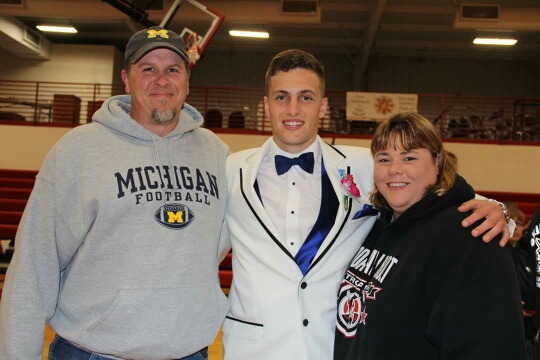
Tattersall’s host family, Erick and Heather Thornton and their son, Derick, have enjoyed watching him compete.

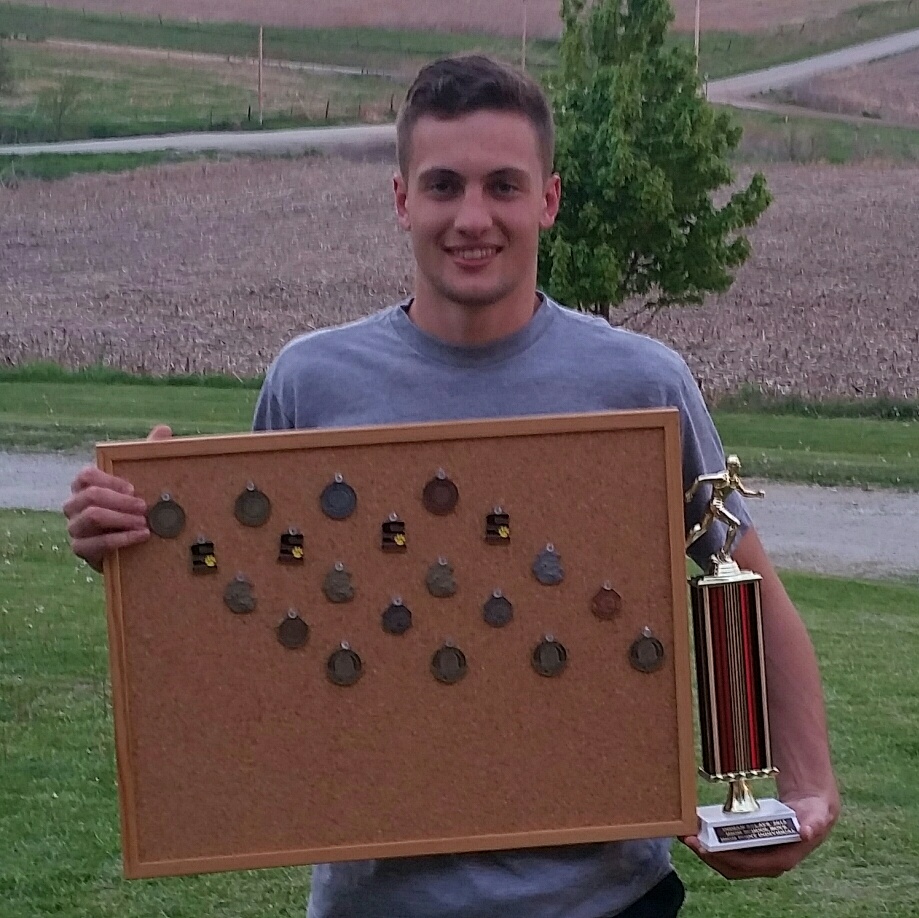
“He is a natural to jumping events, and having never done it before, we didn’t expect him to be doing so well,” Heather said. “It’s been great to celebrate with him each time he sets a new personal record or see his face light up when he gets another trophy or medal.”

NaliFamilyAustralia

Darwin is the capital of the Northern Territory of Australia and has a population of 136,000.

Tattersall said while the language is the same and western culture is shared, there are several differences between his home country and the US.

“We drive on different sides of the road and (there are) changes in climate. Here it gets really cold and I’m used to it being hot year round,” he said.

The food is also different.

“Americans have so many choices,” he said. “There are so many different kinds of snacks and restaurants in the states. In Australia, we don’t have free refills and very few candy bars. I love trying it all.

“I do miss vegemite, though.”

Vegemite is a popular spread for sandwiches, toast and crackers in Australia. It’s dark brown, tastes salty and slightly bitter and is made from leftover brewers’ yeast extract with vegetable and spice additives.

Tattersall has also found that school is somewhat different.

“There are no sports in schools in Australia and here there is something to do all year,” he said.

Nodaway-Holt

The students at Nodaway-Holt, however, are mostly the same as those in Australia.

“(They) like similar things such as hanging out on the weekends, playing video games and they like to fish and hunt,” Tattersall said.

Sarcasm has been a bit of a challenge for him, he said, understanding when it’s being used and what is meant by it. But he is really enjoying his time at Nodaway-Holt especially participating in athletics and making new friends.

“My school is amazing,” he said. “And I’ve built so many friendships that will last a lifetime.”

That includes his host family.

“I have been placed with an awesome host family who are very supportive and keep my family in Australia involved with pictures and videos on Facebook,” he said.

Heather said they are grateful for the opportunity to have him in their home.

“He is a great kid, very funny and easy going, polite and enjoys interacting with others,” she said. “He has taught us many things about his culture and answers your questions, even if it’s the 500th time he had answered it. Watching him experience new things is a joy.

“We are grateful for the experience and know he will be a part of our family for many years.”

NaliLong

NaliHigh

Track

While there were no athletics offered at school in Australia, Tattersall did play basketball in what would be equivalent to a YMCA or community center league.

In addition to track and field, he participated in part of the basketball season at Nodaway-Holt after he arrived, and because he will be here until November, he plans to also play football in the fall.

Before Tattersall arrived in Missouri, a few students had shown Coach Josh Petersen video clips of him dunking a basketball from right inside the free throw line.

“When he started school here, I think it was his first or second day of basketball practice, I asked to see him dunk it,” Petersen said. “And I was just amazed at how high he could jump.”

So when track season rolled around, Petersen said he couldn’t wait to see how well he could or would do in the jumping events.

“Long jump and high jump weren’t really an issue but I was curious to see how he would do in triple jump,” he said. “The day before our first meet, I showed him the technique. And after seeing the look on his face and him saying ‘far out’ in that Australian accent of his, I figured he would like it.”

Not only did he like it, he excelled at it.

The day after learning how to triple jump, Tattersall participated in his first meet and jumped around 38 feet. Now, he’s jumping nearly 43 feet.

His long jump started at around 18 feet and now he’s jumping 20’2”.

In high jump, Petersen said he was stuck on 6’2” for awhile but he eventually got 6’4” at the Mound City meet which is his best and a Nodaway-Holt school record.

He was also a part of the 4×200-meter relay team, which Petersen said fared pretty well in every meet.

“Nali has been a very big part in the success of our track team this year,” Petersen said. “We only had six guys out and he was usually first or second in every event he was in. He has been our high point guy in every track meet, usually scoring 26 to 30 points by himself.

“I have really enjoyed watching him do his events and couldn’t have asked for a better person to coach in my first year. It’s been exciting to watch him perform.”

With his unexpected success, Tattersall is now considering the sport as a potential part of his future.

“Participating in track at the collegiate level is not a possibility (at home); they don’t have sports in college there,” he said. “I could continue track in Australia, however, it would be very limited and difficult.”

So after he finishes high school, he said he will consider returning to the US to further his education and participate in track while doing so.

“This has been amazing,” Tattersall said, “and I can’t wait to see what the future holds.”

NaliMedals


Hunter’s story

By Jacki Wood ~ written for a college assignment in 2010

34557_453999192673_2462391_n

Tears roll down his cheeks like steady raindrops sliding down a window during a spring thunderstorm.

“I HATE YOU, DAD, I HATE YOU,” he yells from behind his closed bedroom door.

Hunter’s tears mix with the mess on his face and he wipes it with his shirtsleeve, leaving streaks of it across his cheek. He coughs and lets out one last wail before trying to compose himself.

He sniffs hard, wipes his face again and licks his dry lips.

“Mom,” he whimpers, knowing I’m standing outside his door. “Can I come out now?”

~

This is not a toddler temper tantrum. This is the winding down after a rage, after the shoving of his sister, the throwing of furniture, the growling and yelling and screaming and flailing.

This is 11-year-old Hunter who lives with bipolar disorder, one of an estimated 10 percent of children who deal with serious emotional and mental disorders, according to the US Surgeon General.

~

Bipolar is a brain disorder that causes unusual changes in mood, from the lowest of lows to the highest of highs, and can also be known as manic-depressive illness or manic depression.

In children, it is sometimes confused with attention deficit hyperactivity disorder because of the many similar symptoms when they are manic, according to the National Alliance for Mental Illness. The difference, though, includes elated mood, grandiose behaviors, flight of ideas, extreme changes in behavior and energy levels and decreased need for sleep. Then there is the depressive and even suicidal opposite side of the disorder.

During mania, children and teens can “feel very happy or act silly in a way that’s unusual, have a very short temper, talk really fast about a lot of different things, have trouble sleeping but not feel tired, have trouble staying focused, talk and think about sex more often and do risky things.”

During depressive episodes, they can “feel very sad, complain about pain a lot, sleep too little or too much, feel guilty and worthless, eat too little or too much, have little energy and no interest in fun activities and think about death or suicide.”

Other symptoms can include impulsive behavior, psychotic symptoms like delusions, hallucinations, and disorganized thinking and cognitive disturbances.

~

Mere minutes from his raging, things seem to have changed inside Hunter’s brain as I sit with him on his bedroom floor. He’s laughing, smiling and showing the dimple that dots his right cheek as he describes his latest car design to me. His fiery red hair seems a softer orange now. He drags out a sketch pad with curled edges and begins drawing.

And just like that, all seems to be well again.

At least for a few moments.

~

One of the biggest differences between children and adults with bipolar disorder is that an adult can go for weeks or months before they cycle from high to low or vice versa. With children, though, they can have multiple cycles during a single day. It’s really a roller coaster of emotions on a daily basis, from giddy highs down to depressive lows. Children and teens with bipolar disorder may also have mixed episodes that have both manic and depressive symptoms.

In the past several years, I’ve done plenty of reading and studying up on the illness, trying to figure out how best to raise Hunter and how to teach him to deal with it all. Most of the time I feel lucky that his symptoms aren’t as serious as others who I read about. Still, as he grows and gets older, I’m concerned how the illness will change and affect him in other more serious ways.

“My brain works differently than other people’s brains,” Hunter said. “Sometimes I go all crazy.”

Crazy, for Hunter, means he feels mad, sad, scared and even sometimes confused.

And then there’s the opposite of those feelings.

“Sometimes when I feel good, I think I can do anything,” he said.

That translates into him feeling that sometimes he is smarter than his teacher at school or his classmates, who don’t like it when he gets overly excited or yells out all the answers in class. It can also mean that he feels he knows better or more than his parents.

That’s not all that different than other kids, but it can be a little more difficult with him because of the other symptoms he experiences.

~

A couple of hours have passed since Hunter’s blowup with his dad. He is still in his room but has moved from drawing the car to building it using K’nex that litter his carpeted floor. The incident that led to him screaming his hatred toward his dad was about one of his Saturday chores – vacuuming the family room floor.

Saturdays are tough for Hunter. After breakfast, the chores begin. On his list for the day was to clean his bedroom, put his clean clothes away, clean the upstairs bathroom and vacuum the family room floor.

A reasonable amount of time for his younger sister to do the same chores is usually two hours or less.

But Hunter says he hates to work and drags it out nearly the entire day, even though he has been reminded that once his chores are completed he can do whatever he likes until bedtime.

“I don’t really like to do work,” he said. “I just want to get it done, but most of the time I don’t want to do it all.”

His seven-year-old sister completes her comparable chores well before lunchtime and is off to ride her bike and play outside with the dog.

By 11:30, Hunter has yet to complete even one of the tasks. He’s in the family room now, where he should be vacuuming. But instead of the cleaning, he’s sprawled out on the floor flipping through a car magazine, completely enthralled.

He goes all out for the things he enjoys and I love that about him. But I also believe he needs to learn the value of work, regardless of his illness.

His dad enters the room and quietly reminds him of his chores.

Hunter begins with whining and complaining about all the work he has to do. Then he starts looking for excuses. He’s hungry. He’s tired. His foot hurts. He’s thirsty. His head hurts.

He soon moves to crying. Then screaming. Then all-out raging returns. And finally, his dad must drag him off to his room so he can calm down and not hurt anything or anyone else.

~

“I told my dad I hate him because I didn’t like him when I was really angry,” Hunter said. “I don’t want to cry, but sometimes I feel like I can’t control it.”

The crying comes with the lows but can change without notice to euphoric highs. And when the mania hits, so do the ideas and the feeling he can do or be anything.

“I have lots of ideas of things I want to do,” he said, talking about his future. “I am excited when I feel good. I want to be an inventor or an engineer or an architect or a chef.”

He wants to build the biggest mall in the world. He wants to design the fastest racecar. He wants to own the best bakery in the country.

Everything is a superlative with him. It has to be the biggest or the fastest or the best.

While many of his classmates are busy playing video games, watching TV, playing sports or hanging out with each other, Hunter is setting goals, making plans and creating new ideas to help people and change the world.

Those grandiose ideas are typical of others with bipolar. The goals and ideas aren’t necessarily a bad thing, but not being able to accomplish them all, right now and with great success, is a difficult concept for Hunter to grasp. He wants it all. And he wants it all right now.

~

The dichotomy of the disorder seems to be seen in all aspects of his life, especially at school, where he attends Tri-County in Jamesport.

He likes math and excels in it, his fifth grade teacher Connie Critten said, although his grade card doesn’t always show it.

“Hunter has very good mental math skills and enjoys helping other students who are struggling with math,” she said. “He is usually patient with his classmates while helping them. But he doesn’t like doing homework and his scores are generally lower because he doesn’t finish his work.”

While receiving the highest MAP test in math in his class, his grades are consistently Cs in the subject.

“I don’t like doing homework,” he said, “because I don’t like work.”

We’ve tried many different ideas to help with this – things we’ve read from other parents and things from both his school counselor and his clinical counselor – without a whole lot of success.

More serious than his academic performance, however, is the way the disorder affects his behavior at school.

When Hunter is at his best, he is compassionate, caring and has a positive and uplifting attitude, his resource room instructor Debbie LaFerney said.

“He has a contagious smile and loves to please his peers,” she said. “Hunter knows where he wants to be in the future with his behavior, with school and with his career. He has a creative and imaginative mind and is always thinking about some invention he is going to work on.”

But being at his best – kind, imaginative, helpful – can change quickly, his school counselor LeAnna Wilcox said. He can be happy one minute and crying or in a rage the next.

“His mood swings could be associated with a ticking time bomb; you never know when they are going to go off,” she said. “When he gets upset, he tends to totally shut down. He becomes agitated and logic does not take place.”

Whatever the reason, his explosions disrupt the classroom and sometimes even the school.

“Hunter sometimes becomes very aggressive, throwing chairs, yelling or pushing other students,” Critten said. “He has been known to cause physical harm to others. And his crying can disrupt our classroom and the entire elementary building.”

He also appears to have a high anxiety level most of the time, she said, because he has so many goals he wants to achieve.

“He is afraid he will mess up or that his peers are looking at him and judging him,” she said. “Then he has an outburst as a way of protecting himself.”

~

Hunter walks out of his bedroom, the red blotches that dotted his face from his excessive crying have begun to disappear and his orange freckles shine once again. I offer him a hug and he presents both his newly constructed car and the drawing from his book.

And then as if nothing has happened, he begins telling me about his latest idea of making a more fuel-efficient car.

~

As bad as it was on this particular Saturday morning, it has been much worse.

We feel fortunate to have found help in recent years through the North Central Missouri Mental Health Center in Trenton where Hunter has received new medications, counseling and support.

He currently takes three mood stabilizer prescription drugs: Abilify, which he has been on since he was first diagnosed, Strattera and Lamictal.

“I don’t like to take my medicine,” Hunter said. “But my mom keeps telling me it helps me be better.”

In addition to the medication, he visits a psychiatrist every three months, meets with a clinical counselor each month and receives visits from a caseworker both at home and at school.

~

Hunter’s eyes light up as he describes the components of his new car idea. His words fly out of his mouth, one right after the other, faster than I can keep up with. I smile and sigh to myself. So many ideas – too many ideas. Hunter copies my gentle smile with a wide, toothy genuine grin of his own.

When he has finished explaining the idea, he shrugs, a little embarrassed and then waits, seeking approval. I reach out and give him that approval with another hug and smile.

I think it’s time to apologize to dad, I whisper to him.

Hesitant, he plops his car and sketch pad on his desk of overflowing ideas, papers, pads, cars and creations. He strolls out of the room, head down, and quietly calls out for his dad who is in the kitchen.

~

“Did you finish vacuuming the family room,” his dad asks, after Hunter had apologized for his actions.

“Yes,” he lies, with a blank stare on his face, trying not to make any moves to show his deceit.

It doesn’t matter. We all know he’s lying. Lately, most everything coming out of his mouth seems to be a lie. That’s an exaggeration, of course, but we’re tired and we don’t know what to do about it. There’s other deceitful behavior, like sneaking food from the kitchen during the night and stealing money from my wallet.

Consequences don’t seem to matter much to Hunter. And logic is lost on him most of the time.

There are so many facets to bipolar, and it seems when we figure out how to deal with one thing, something else pops up.

The lying is also something his caseworker Terri Westover has seen with Hunter when she visits him at school.

“One of the main things I’ve noticed lately about Hunter is his easiness in not being truthful,” she said. “I always talk to teachers before or after I talk to him about whatever the current incident is and the stories are usually quite different. Part of it is probably him minimalizing what actually took place. I don’t think he’s necessarily being conniving with his untruthfulness, but it keeps him in an alternate reality. He gets quite angry when confronted, but that’s what we’ve been working on at school and at home, bringing him back to reality.”

~

Hunter sulks back to the family room, this time without the dramatics. He seems to be too exhausted for another outburst. He grabs the vacuum, turns it on and roughly and quickly pushes it back and forth around the couch, TV and the magazine that’s still lying wide open on the floor. A few toys also dot the floor, some of which he threw in his earlier anger. There’s also the chair he knocked over in his rage.

I walk in and sit on the couch. He turns off the vacuum when he sees me. I encourage him, telling him I know he can do it and do it well. His dimple resurfaces with his smile as he picks up the toys, the magazine and the chair – and he finishes the vacuuming.

He really is a great kid, but it’s so hard to know if what we are doing is right with him or for him. It’s also hard because it feels like a lot of people don’t see the good in him with his dramatic changes in mood. I feel a lot of judgmental stares from others who get annoyed by his behavior, like I’m being a bad parent or no parent at all. We’ve made lots of mistakes with him, but it’s really frustrating when others don’t give him a chance or enough time to show who he is when he’s at his best.

So we just keep taking one day at a time. Some days are good, some are more of a struggle.

But even with the struggles and the mistakes, we feel like we’ve come a long way since he was first diagnosed.

“It’s difficult for me to describe the difference between the past couple of years and how it was in the beginning,” his dad says. “It’s like night and day.”

~

While Hunter knows bipolar disorder is something that will affect him his entire life, he is grateful for the help he is receiving.

“I’m a little afraid of my future because of bipolar,” he said. “But I know my family loves me even when my brain is crazy.”

(note from 2015: while we were blessed with wonderful mental healthcare resources and services when we lived near Jamesport back in 2010, we haven’t been so lucky where we live now. Due to the lack of resources here, we’ve had to make some major changes in dealing with Hunter’s illness. So we face new challenges while we continue to take one day at a time with him. Lack of adequate mental healthcare services affects thousands of people across the country. I encourage you to contact your legislator in support of mental healthcare and not be afraid to talk about mental illness.)


I’ve jumped on the bandwagon & I’m not afraid to admit it

by Jacki Wood, “That they might have joy” column, written for the Nodaway News Leader  

I wrote a lengthy Facebook post last October about how I was quickly becoming a Kansas City Royals fan.

“I’ve never been one to jump on the bandwagon for anything,” I wrote. “I’m also not one to root for a team just because you live near them, which is why I’ve never been a Royals or a Chiefs fan.”

“And, I’m not really a baseball fan either. I enjoy watching the postseason every now and again, but not much more than that.

“But…

“I think I’m jumping on this Royals bandwagon. And I’m not ashamed to admit it.

“I watched that crazy wild card comeback win and now I’m hooked. I’ve watched every game since then, staying up way past my bedtime when they’ve gone into extra innings, and I keep asking myself, ‘What are you doing? You don’t even like them.’

“But this team… There’s something I can only describe as magical about them.

“Let me say this, however, I’ve been a Jeremy Guthrie fan since he arrived in Kansas City (he played briefly at BYU before transferring to Stanford). And since I follow him on Twitter and Instagram, I’ve sort of been in the Royals loop all season long.

“It’s more than that now, though. I thoroughly enjoy watching these guys play. The chemistry, the defense, the bullpen, the speed… they truly are a special team.”

The Royals eventually lost to the Giants in the World Series. And that’s where I thought my bandwagoning would end.

But then a couple of weeks ago, I turned on the TV and saw Guthrie was pitching. And so I watched. And then again the next day. And the next. And then the next day when they weren’t playing, I bought my first Royals T-shirt.

And I’m still watching.

My husband asked what was going on with me. He usually gets a sports reprieve between basketball and football seasons.

Is it the winning? Possibly.

I mean, that’s how it started last fall anyway.

But it’s more than that. There’s just something about these boys in blue.

“A lot of baseball fans fell in love with Kansas City last fall,” MLB.com columnist Anthony Castrovince wrote last week.

I know I did. And I’m not even a baseball fan.

Go Royals.


‘There’s still work left to be done’

written by Jacki Wood for the Nodaway News Leader, March 2015

When I was a kid, everyone wanted the Crayola 64-pack with the built-in sharpener, even though the school supply list only required us to have eight crayons.

Not just blue and green but cornflower, sea green and aquamarine. Not just red, orange and yellow but mahogany, magenta, salmon and goldenrod.  Bittersweet, burnt sienna, periwinkle.

That 64-pack was a beautiful array of possibilities.

***

“Remember the Titans” shares the true story of the TC Williams High School football team, which was integrated in 1971. In one scene, Coach Herman Boone takes his players to Gettysburg.

“Fifty thousand men died right here on this field, fighting the same fight that we are still fighting among ourselves today. This green field right here, painted red, bubblin’ with the blood of young boys… Listen to their souls… Hatred destroyed my family. You listen, and you take a lesson from the dead. If we don’t come together right now on this hallowed ground, we too will be destroyed, just like they were.”

We’ve come a long way, but we’re still fighting the same fight.

I watched the Selma 50th Anniversary ceremony over the weekend and was saddened by the images I saw from our history, but inspired by the words of Rep. John Lewis, who was brutally beaten on that Bloody Sunday in Selma.

“We must use this moment to recommit ourselves to do all we can to finish the work. There’s still work left to be done…

“We come to Selma to be renewed. We come to Selma to be inspired. We come to be reminded that we must do the work that justice and equality calls us to do.”

There is still work to be done.

Just this week, the University of Oklahoma closed one of its fraternities after a video emerged of the chapter’s members engaging in a racist chant.

How and why is this still happening? Angered and disgusted, I remembered Rep. Lewis.

There is still work to be done.

“A just-released Census Bureau report shows that by 2044, whites will no longer comprise a racial majority in the United States,” wrote William Frey in a Los Angeles Times op-ed recently. “By then, the nation will be made up of a kaleidoscope of racial groups, including Latinos, blacks, Asians, Native Americans and multiracial Americans.”

How beautiful — a kaleidoscope of Americans.

“This ‘no racial’ majority scenario, even three decades away, provokes fear in some white Americans: fear of change, of losing privileged status or of unwanted people coming into their communities. But it is a change that should be welcomed.”

I agree. I grew up in a Christian family and church that taught me God created all of us and loves each one of us. From a truly Christian perspective, racism doesn’t make sense to me.

“God is no respecter of persons: But in every nation he that feareth him, and worketh righteousness, is accepted with him” (Acts 10:34-35).

“A new commandment I give unto you, That ye love one another; as I have loved you, that ye also love one another” (John 13:34).

What makes even less sense to me are the people who profess to believe the same as me but their words and actions speak otherwise.

“This people draweth nigh unto me with their mouth, and honoureth me with their lips; but their heart is far from me” (Matthew 15:8).

Regardless of your religious beliefs, racism is also a moral issue.

In “Long Walk to Freedom,” Nelson Mandela wrote: “No one is born hating another person because of the colour of his skin… People must learn to hate, and if they can learn to hate, they can be taught to love, for love comes more naturally to the human heart than its opposite.”

Rep. Lewis concluded his remarks in Selma by saying, “We are one people, one family, the human family.”

Each one of us is a beautiful part of the kaleidoscope. The cornflower, the sea green, the aquamarine. The mahogany, magenta and goldenrod.

***

Interestingly, Crayola now sells the Ultimate Crayon Case with 152 colors. They’ve added things like mountain meadow, pacific blue, royal purple, wild strawberry, scarlet and sunglow.

With more color brings more beauty.

Maya Angelou said: “It is time for parents to teach young people early on that in diversity there is beauty and there is strength.”

I couldn’t agree more. Teach them young. Teach them old. Teach them all.

There is still work to be done.


Working Abroad: MHS grad teaches in France to further education

Written for the Nodaway News Leader By Jacki Wood

B7zxPmNCcAE8zuo

“Je suis Charlie” helped unite a country and the world following the January 7 attack on the Charlie Hebdo newspaper offices in France.

And a Maryville High graduate felt its effects much closer as she is currently a teaching assistant there.

Ruth Boettner has seen “Je suis Charlie” signs throughout Clermont-Ferrand, the city where she is working. The phrase, which means “I am Charlie,” was first seen on social media as a way to support freedom of speech and the victims of the attack. The movement has grown with marches throughout France and around the world.

“It’s truly a sad, terrible thing that’s happened,” she said. “The saddest part for the assistants in Clermont is that one of the victims, Michel Renaud, is from Clermont-Ferrand. His daughter is a student here.”

She said it’s always sad when people and organizations are targeted for the viewpoints they express.

“It’s felt even more when you are just a few degrees of separation away from someone who was killed,” she said.

***

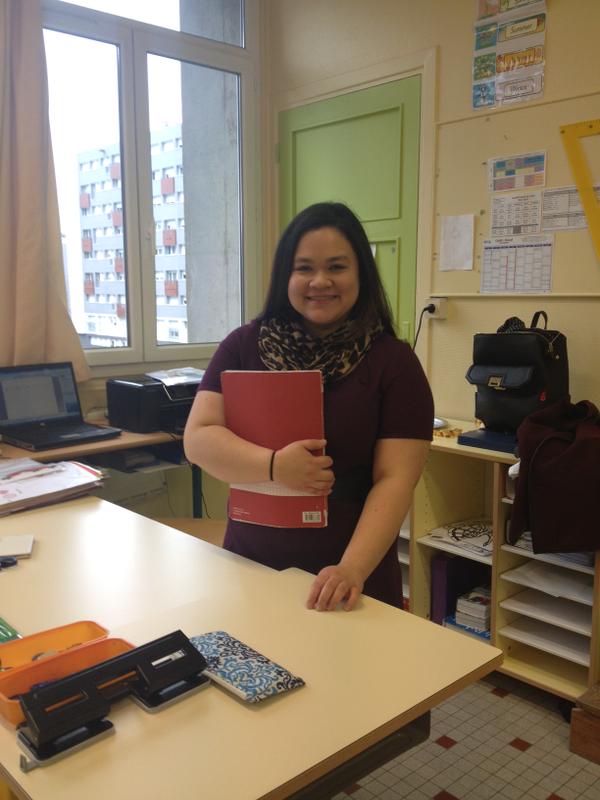
Boettner was born in the Philippines but grew up in Maryville, the daughter of Richard and Bing Boettner. She graduated from MHS in 2009 and then attended the University of Nebraska-Lincoln where she had majors in French and global studies and minors in African studies and music.

Her background in French began during her sophomore year at Maryville High when she started studying the language. She also took a trip to France after her senior year with her classmates and their teacher, Linda Ferris.

“I thought maybe I’d minor in French when I went to UNL at the most, but I quickly realized how much I loved the language,” she said. “After one semester, I realized I liked the French curriculum (and) decided to be a French major.

“It really helped me with my global studies and African studies curriculum but especially my honors thesis, as I spent a lot of time translating primary source documents from French to English.”

She participated in a Study Abroad program in France at the Université de Caen Basse-Normandie in 2012.

“While at Caen, I more or less studied French as a foreign language,” she said. “It was really what pushed me over the hump in terms of learning the language. You don’t really know how well you know it until you actually have to speak it every day.”

Altogether, Boettner has spent about eight years learning French and considered herself nearly fluent. When she graduated from UNL in May 2014 and another opportunity to continue her education fell through, she applied for the Teaching Assistant Program. She said she hopes to finally attain that fluency through this opportunity.

B8YO5ZxCMAAyfRp

***

While continuing to learn the French language is a large part of why she is in France, her education is going far beyond as she is learning more about the world around her.

“There have been multiple anti-Muslim attacks throughout France since the Charlie Hebdo attack,” she said. “Of course, they may not all be directly related. Still, I worry about how this will affect France’s relationships with its Muslim citizens and residents.”

***

Ruth Boettner applied for the Teaching Assistant Program in France last January to continue her education.

“I really wanted to go back to France,” she said. “And I worked with kids all through college and loved it, so it just made sense.”

Boettner received notification in April that she had been hired to teach in Clermont-Ferrand, and after graduating in May from the University of Nebraska-Lincoln, she began preparing for her return to France.

Her teaching contract is from October 1 to April 30 but she arrived in mid-September and plans to stay through the latter part of May so she can do some extra traveling before returning home.

Before she left for France last fall, she said her goals included finally becoming fluent in French, traveling and enjoying the opportunity to return to the country.

“I only spent about three months in France when I studied abroad,” she said. “And now I’m hungry for more, I suppose you could say.”

B8YO3F_CAAATOJS

She continued: “I love working with elementary-aged kids, watching them learn and grow, and I hope I can do that for my future students.”

***

Boettner has been teaching in France for roughly three months now and said it has been going really well.

“I had a little trouble getting into the swing of things when I first started out,” she said. “I’ve worked with kids in after-school programs and summer camps for several years before this, but teaching solo in a classroom setting is really a different ball game.”

She said her biggest struggle was starting with things that were too difficult too quickly.

“It takes time, of course,” she said. “You get a grasp on where each individual class is in their learning and how they learn best and you go from there.”

Boettner works two days a week – at one school on Tuesdays where she teaches six classes and at another on Fridays where she teaches three.

“The students at my Friday school are in a specialized English program in which they have English classes four days a week, so they’re more advanced than my Tuesday students,” she said.

Boettner said her favorite part of teaching has been watching the students succeed.

“When my students get so much joy from their little victories,” she said, “it’s great to see that kind of excitement from learning.”

B8YO1zVCQAA3_-b

One of her favorite experiences has been with a Thanksgiving lesson she gave, where she made big hand-shaped turkeys for each class. She asked the students what they were thankful for and then wrote those things on the turkey.

“They would usually give me the French word and I would write the English word next to it,” she said. “A few of them even said ‘We are thankful for Ruth’ and for their English lessons. I was feeling particularly homesick that week so it definitely cheered me up.”

The rest of her work time is spent fulfilling duties for the conseillers pédagogiques, who are the people who train the teaching assistants and new teachers.

So far, she has translated training documents and recorded her voice for use as a teaching tool for them. She, of course, also spends a few hours a week planning lessons and said she may begin a weekly English discussion group for volunteer teachers.

***

Outside of her work commitments, Boettner said she has enjoyed getting to know the other language assistants and exploring the city.

“The region is absolutely beautiful,” she said. “I feel really lucky regarding where I am and the people I’m sharing this whole experience with.”

She also spends her free time studying for the GRE and applying to graduate schools, which she hopes to begin following this teaching assistance opportunity.

“Fingers crossed, I’ll be entering a doctoral program in African history,” she said. “I’ll still be using my French. I’m planning on focusing on French-speaking African countries in my future research.”


Have we fallen asleep in life?

By Jacki Wood, That they might have joy column, Nodaway News Leader

In a letter to Trevor Haddon in April 1884, Scottish novelist Robert Louis Stevenson wrote: “Keep your eyes open to your mercies. That part of piety is eternal; and the man who forgets to be grateful has fallen asleep in life” (Letters vol. 4:276).

How many of us have fallen asleep? Or become blind to the abundance we have been blessed with? I know I have at times.

It may be because we’re going through some rough times. Or that dreaded “b” word we use too often – we’re too “busy.” We become distracted by so many things, even good things. Or maybe it’s because there are so many wonderful things around us all of the time, we just take them for granted.

Dieter F. Uchtdorf said: “Our minds have a marvelous capacity to notice the unusual. However, the opposite is true as well: The more often we see the things around us – even the beautiful and wonderful things – the more they become invisible to us. That is why we often take for granted the beauty of this world: the flowers, the trees, the birds, the clouds – even those we love. Because we see things so often, we see them less and less.”

I’ve been especially guilty of this lately. And then a couple of weeks ago, we sang “How Great Thou Art” at church. I was so overcome with this feeling of love from my Heavenly Father, I was unable to sing the words. It’s one of those hymns that always fills me, but on this occasion, I was feeling especially grateful for its powerful words:

O Lord my God, when I in awesome wonder
Consider all the worlds thy hands have made,
I see the stars, I hear the rolling thunder,
Thy power throughout the universe displayed:

Then sings my soul, my Savior God, to thee:
How great thou art! How great thou art!
Then sings my soul, my Savior God, to thee:
How great thou art! How great thou art!

When through the woods and forest glades I wander
And hear the birds sing sweetly in the trees,
When I look down from lofty mountain grandeur,
And hear the brook and feel the gentle breeze:

Then sings my soul, my Savior God, to thee:
How great thou art! How great thou art!
Then sings my soul, my Savior God, to thee:
How great thou art! How great thou art!

And when I think that God, his Son not sparing,
Sent him to die, I scarce can take it in,
That on the cross, my burden gladly bearing,
He bled and died to take away my sin.

Then sings my soul, my Savior God, to thee:
How great thou art! How great thou art!
Then sings my soul, my Savior God, to thee:
How great thou art! How great thou art!

When Christ shall come with shout of acclamation
And take me home, what joy shall fill my heart!
Then I shall bow in humble adoration,
And there proclaim, My God, how great thou art!

Then sings my soul, my Savior God, to thee:
How great thou art! How great thou art!
Then sings my soul, my Savior God, to thee:
How great thou art! How great thou art!

During this season of giving and Thanksgiving, I hope we can all wake up a bit and open our eyes to the many blessings we receive. And in turn, share what we can, and maybe even do a little more than we’ve done before.


Surround yourself with good people

By Jacki Wood, That they might have joy column, Nodaway News Leader


The first time I met Alex was about a week before classes were to begin my freshman year at BYU.

I knocked on the door of what would be my home for that first year of college, not knowing if anyone had moved in yet.

She opened the door holding a blow dryer and a brush, barefoot but dressed fashionably conservative, and her make-up fully done.

I noticed her lipstick.

I don’t remember what I was wearing, but I’m sure it was something like a T-shirt and basketball shorts and probably even a baseball hat.

I was not wearing lipstick – I didn’t even own lipstick – nor was I wearing any make-up for that matter.

Initial judgment (and not one of my best moments in life): Please don’t let her be my roommate.

“Nice to meet y’all,” she said in a very charming Southern way.

So this is the Texas roommate. Well, I do love her accent.

I lived in an on-campus apartment-style dorm my first year with five other girls. We had all written letters to each other before moving in to introduce ourselves. There were two from Utah, one from California, one from Kentucky, one from Texas and me from Missouri.

Alexandria Wagley from Gladewater, TX, was about as opposite of me as one could be. We ended up sharing a bedroom in that apartment, and despite my initial ridiculous first impression of her, we quickly became best friends.

We were roommates for two more years before I moved to California. And we had some amazing experiences together. Most of my memories from college involve her in some way. Football games, religion class, late-night Taco Bell runs, listening to music and singing when we should’ve been studying, watching “Friends” and “Seinfeld” and “ER,” driving up into the mountains, talking about guys and so much more.

-1

After I got married and started a family, we didn’t get to see each other much, living 1,200 or so miles away from each other. But we kept in touch as much as we could, in the days before texting and Facebook. When we did get together, though, it was as if we’d never been apart.

But our friendship in this life was cut short. Ten years ago last week, Alex died after a brief but brutal battle with cancer at the age of 29.

I miss her terribly. But she taught me so much in such a short amount of time that I feel she is with me every day. And I could go on and on about all of the things she taught me but I could fill a book.

What I loved most about her was that she was genuinely happy and genuinely good. And her Texas ways always made everything more fun.

In the years since Alex’s death, I’ve kept in touch with her mom. She once wrote me: “Alexandria always continued on and endured cheerfully. She had so many disappointments, but she always came up smiling. She was such an example for me. She was THE force for good in our family.”

It’s been said that you become like the five people you spend the most time with, so choose carefully. And I’ve been thinking about that a lot lately, with the anniversary of her death.

I love this quote by Quentin L. Cook: “People have so much to offer us if we are willing to learn from them. That is why it is important to surround yourself with good people.”

So that is my challenge for all of us. Choose your friends wisely – surround yourself with good people. We can learn a lot from them if we are willing, just like I did from Alex, who continues to bless my life in countless ways.


Parnell couple uncovers long-forgotten cemetery

By Jacki Wood for the Nodaway News Leader

Located near Honey Creek and the Platte River in eastern Nodaway County, the tiny sawmill town of Wilcox is long gone and mostly forgotten.

But Aaron and Rosey Runde are doing their part to change that.

Prior to purchasing their farm near Honey Creek in the rural Parnell and Ravenwood area, the Rundes were out looking at the farm when they walked right past it without even noticing.

It wasn’t until Aaron walked by it a second time that he realized he was walking past a cemetery.

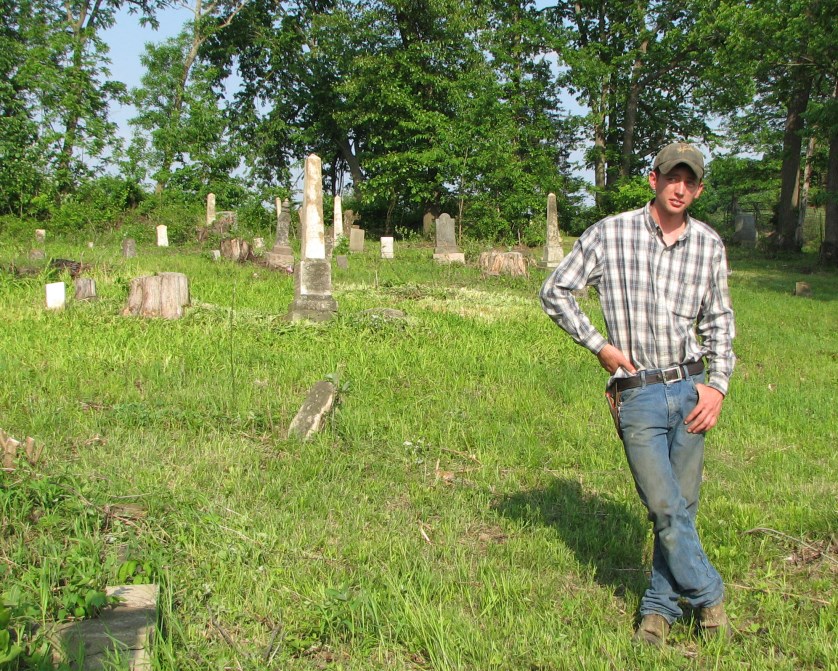
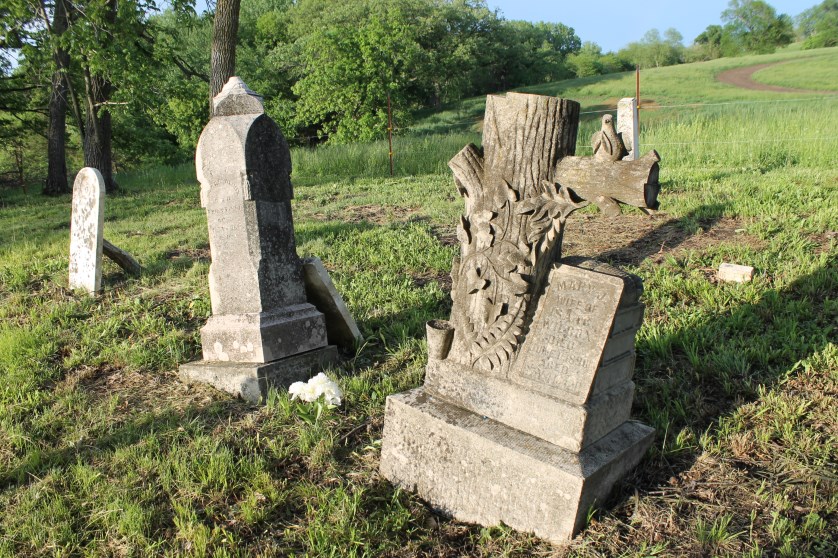
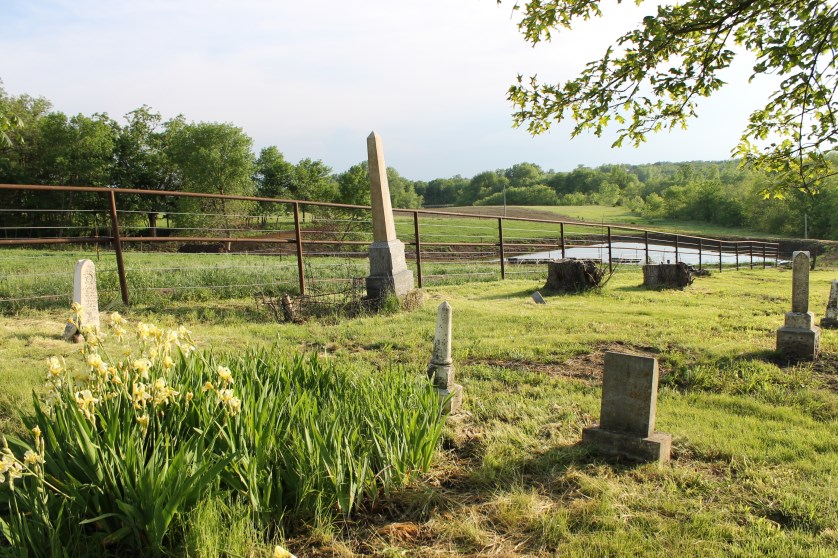
Located in the southwest corner of their farm, it is the Wilcox Cemetery and the oldest gravestone dates back to 1872.

“I didn’t know what to think at first,” he said. “I thought possibly it was a small family cemetery.”

He soon realized it was more than that.

When he started to uncover the cemetery, only two or three of the stones were actually still standing.

“Most of the stones were broken off and laid scattered in pieces,” he said. “Now, 67 stones have been found and pieced back together.”

Cemetery1

He said he’s spent well over a year’s worth of Sundays clearing and cleaning up the cemetery so far with the help of his wife and friends Josh Schmitz, Cody Schmitz, Caleb Spire and Kim Savano.

“I started by cutting down lots of good-sized trees and lots of brush and piling it all up and burning it,” he said. “It took a whole lot of clearing and cleaning before I could even think about mowing it.”

Runde said the work he’s done to restore the cemetery was mostly done out of respect for the people buried there but also from a feeling of obligation since it rests on their property.

“Reading the gravestones has been educational and enlightening,” he said. “Some of them have lengthy epitaphs. And a lot of the stones are infant graves which makes us thankful for medical advancements over the past 100 years.”

Cemetery2

Cemetery3

In addition to clearing and cleaning up the area, he has replaced the fence on three sides of the cemetery, added a new entrance gate on the west side and recently built a new pipe fence along the south edge.

“I plan to continue to make improvements,” he said, “along with keeping it mowed and cared for.”

Several folks have stopped by the “newly found” cemetery to thank Runde for his efforts to uncover their ancestors’ grave markers.

Runde said he has no way of knowing how many graves could still be missing so he’d like to have a map of the cemetery to see how many were there at one time. Also, if anyone knows of a good, inexpensive way to mend broken gravestones, please let him know.

He can be reached at 660.937.2060.

Cemetery4 Cemetery5 Cemetery6


Are you following us yet?

That they might have joy column for Nodaway News Leader by Jacki Wood


Interdependence is and ought to be as much the ideal of man as self-sufficiency. Man is a social being.” – Mahatma Gandhi

I joined Facebook in April 2007 as a way to stay in touch with family. I recently looked back at some of my first posts and they were mainly just conversations between my sister, Amy, and me. It has changed a lot since then and I have changed how I use it, although one of the best things about it is keeping in touch with family and friends all across the country and around the world.

Then in March 2009, I joined Twitter and hated it. Like a lot of new technology, and even social media, I didn’t really get it. Only 140 characters per tweet? No thanks. And who cares what some celebrity is eating for breakfast. But I kept hearing about what a great tool it was for journalists. Really, it’s all in who you follow. I use it to learn. I get my local, national and worldwide news from it daily. And I can keep up with BYU athletics more readily.

And then I jumped on the Pinterest bandwagon, which I use to find recipes, plan road trips, gather ideas for family reunions, hairstyles, holidays, the home – and thousands of other things.

I started using Instagram in May 2012 as a fun way to edit my road trip pictures and see more of the world around me.

Now I realize not everything about social media is good. I recently took a six-week hiatus from Facebook. I came back refreshed, made some changes and love using it again. But I do advocate moderation in all of this.

So why am I sharing about my social media use?

Well, I also manage the social media accounts of the Nodaway News Leader. After reading about how businesses were getting involved, I advocated the NNL get on board. In August of 2009, we joined Facebook and Twitter, and in the years since, added YouTube, Pinterest and Instagram. It’s been quite a ride.

I love that I can be sitting in my home, three hours from Nodaway County, and watch the Spoofhounds (@Spoofhound1) play football on Leader Live Action and tweet that Brody McMahon (@mcmahon_34) just scored a TD for the Hounds or that Jacob Cacek (@BigSauce_05) came up with a big sack.

Or that the new North-West Nodaway football co-op (@NNMustangs and @West_Nodaway) won its first game.

Or retweet that the Jefferson (@JC123Eagles) girls softball team won 15-2. Or the South Nodaway (@SouthNodawayFAN) softball team defeated Albany.

Or share events happening at Mozingo Lake (MozingoLake), at the university (@NWMOSTATE) or with Big Brothers Big Sisters (@BBBSNodaway), just to name a few.

On Twitter, in addition to live-tweeting games and scores, we also tweet school and community events, post content from our website and information we feel our followers might find worthwhile.

On Facebook, we share lots of photos, stories and fun and distribute news, information and alerts.

On Instagram, we post photos (obviously) of high school sports, community events and more.

On Pinterest, we share recipes on our Good Eats board that correlate with those in the paper, holiday fun and informative boards like local schools, businesses and elected officials.

We have a small staff and are limited in covering all of Nodaway County, its community governments, events and nine school districts for the paper.

The same can be said about our social media accounts.

But we are always looking at ways to improve. I try to stay up on the latest trends (they move very quickly), what people want and ways to better connect with you, our readers and followers.

What works for some, doesn’t work for others, though. So please feel free to email me at jwood@nodawaynews.com with your suggestions, complaints and compliments. Or, better yet, tweet me at @jackijwood. I’d love to hear from you.

You can also tweet the paper at @NodawayNews or the rest of the staff: Kay Wilson, publisher/owner, @KWilsonNNL; Dustin Henggeler, sports reporter, @DHenggeler; Kathryn Rice, reporter, @Kathsmagic; Tiffany Whipple, advertising rep, @tiffwhipple; and Brent Barnett, videographer, @25Barnett.

Neal Schaffer, author of “Maximize Your Social,” said: “Social media replaces nothing – but complements everything.”

We’re still the same Nodaway News Leader, bringing you good news and covering all of Nodaway County, but we’re just complementing it more socially.

So if you’re not already, give us a follow on Facebook, Twitter, Pinterest and Instagram. We’d love to connect.


Life after Energizer…

Life after Energizer keeps on going and going and going: Bow Wow Barber offers mobile pet grooming

By Jacki Wood


Editor’s note: this is the first in a series about former Energizer employees who have become entrepreneurs since the plant’s closing.

Jennifer Lynch pulls her forest green mini bus right up to the front door and hops out ready to groom Bella, a cute Maltese.

Normally timid around others, Bella gave her new groomer a few kisses after her trim.

It’s a familiar scene happening all over Northwest Missouri and Southwest Iowa, from Maryville to Skidmore and Bedford to Bethany. Dogs and cats getting trimmed, bathed, pampered and pedicured. All at the convenience of the pet owner. And all right outside their front door.

And soon, that forest green mini bus will be replaced with a custom-built trailer for Lynch’s new business, Bow Wow Barber mobile pet grooming.

***

When Energizer made the announcement in November 2012 that it would be closing the Maryville plant, nearly 300 employees faced uncertainty.

“At first, the announcement was very unsettling and left a lot of what ifs, what now, what am I going to do questions in all of our minds,” Lynch said, who resides in Maryville and has been a resident of the area her entire life. “But I couldn’t let all that bother me.”

Lynch, 35, and the mother of two children, had worked at Energizer since March 2000.

She tossed around several ideas about what to do. The self-described animal lover had been grooming her own dogs for several years, so going in that direction just made sense.

In December of last year, she decided to attend Petropolis, an International Society of Canine Cosmetologists accredited school in St. Louis. She was trained by master groomers and has the option of becoming a master groomer herself.

“I just looked at the situation as a way to finally get a chance to do something I wanted to do and not what I had to do,” she said, “to do something that I truly enjoy.”

Through her schooling at Petropolis, she became a certified pet groomer and opened Bow Wow Barber in April of this year.

***

The mobile business offers a full grooming service including baths, nails and haircuts on all sizes of dogs and cats.

“I did a lot of research when making the decision to go mobile with my grooming,” she said. “(I wanted) to be different than others and to cater to people and their busy lifestyles.”

Some of the advantages of being mobile, Lynch said, include pets not having to wait in cages before and after grooming, less stress for pets visiting a loud shop with other animals and more convenient for owners without having to drop off and pick up their pets.

“I provide a service unlike other groomers in this area and the results have been fantastic,” she said. “I enjoy everything about my decision to start up my own business.

“Since the plant closed, my whole life has changed – for the better.

For more information or to schedule an appointment, call 660.541.0621 or visit Facebook.com/BowWowBarber2014.