Author Archives: Jacki Wood

Farewell, O Captain, My Captain

That they might have joy column by Jacki Wood for the Nodaway News Leader


From a very young age, I knew I wanted to be a writer.

There were many along my way who encouraged me. But it wasn’t until English teacher John Keating took to the screen in “Dead Poets Society” that I truly found the courage to do so.

And so, like so many others this week, I was deeply saddened to hear of the tragic passing of Robin Williams, who portrayed Keating in the movie.

The film ranks up there as one of my all-time favorites. Williams’ character was also referred to as “O Captain, My Captain” by his students, from Walt Whitman’s poem about Abraham Lincoln. And that is how I will forever remember Robin Williams.

There were so many other great characters and films, of course.

Aladdin, Patch Adams, Good Will Hunting, Jumanji, Mrs. Doubtfire, Hook, What Dreams May Come and Good Morning, Vietnam. The list goes on and on.

What a tremendous talent. And what a tremendous man.

Williams was also known for his philanthropic work including being an active supporter of St. Jude Children’s Research Hospital.

And, what a tremendous loss.

Much has been written about Williams already and I will not try to add more to what I know little about.

What I do know is that it’s impossible for most of us to imagine what he was going through, what living with a mental illness is like, unless you are dealing with it yourself. Even then, each circumstance is unique.

Following his death, I read a poignant essay from Zach Bloxham’s To the Wonder blog called “On Depression.”

Bloxham writes: “It is a sad symptom of humanity that those whose hearts are filled with so much laughter and love can also be filled with so much sadness and pain.”

He said: “Much more than simple sadness, depression chisels away at your very nature. You do not know why you are feeling what you are feeling, but the inability to find the genesis does not alleviate the depth of the distress. You find logic illogical and family nonfamilial. It is the darkest abyss of the soul. Depression morphs your past, clouds your present and blackens your future.”

Having dealt with these personally, he said: “Within weeks these feelings became inescapable. I wanted nothing more than to find a way to be free from their darkness. My brain began giving me answers I had never before contemplated.”

He continued: “The effects of depression are real and its clutches extend to each and every family you know. Depression is not a sign of personal weakness. Depression is not a condition that can be willed or wished away. Taken to its extreme, it cuts off life itself in horrible abruptness — men and women who should be alive but are not.”

Many times, it is the brilliant minds that are forced to bear this burden, not of just depression, but a myriad of other mental illnesses. Abraham Lincoln, Beethoven, Isaac Newton, Michelangelo, Charles Dickens, van Gogh, Winston Churchill and so many more.

I’m reminded of the words written by former US Sen. Gordon Smith about his son, Garrett, who tragically took his own life at a young age.

He said, “It is hard for me to fathom how anguished and tormented a soul he had become, how hopeless and alone he felt in mind and spirit… If you’ve never been swallowed by that infinite bleakness and hopelessness that accompanies manic depression, it’s almost impossible to imagine.”

Kay Redfield Jamison, a professor of psychiatry at Johns Hopkins University, who also suffers from bipolar disorder, has said that suicide has the “ability to undermine, overwhelm, outwit, devastate and destroy” people.

It has taken another life. Another life cut short by the savagery that is mental illness.

Farewell, O Captain, My Captain. You inspired me. And you will be missed.

If you need help, the National Suicide Prevention Lifeline is there for you: 1-800-273-TALK.


Hard-working Hopkins couple leaves lasting legacy

By Jacki Wood for the Nodaway News Leader

The name Rickard has become synonymous with giving and grant funding in Nodaway County over the last decade.

But the story of Floyd and Gladys Rickard began outside of Nodaway County in the late 1890s.

Early years

Floyd L. “Skeet” Rickard was born October 23, 1896, in Craig, the son of Robert and Hattie Rickard.

Gladys Marie Heflin was born September 1, 1898, in Clarinda, IA, the daughter of Charles J. and Hanna Rogers Heflin.

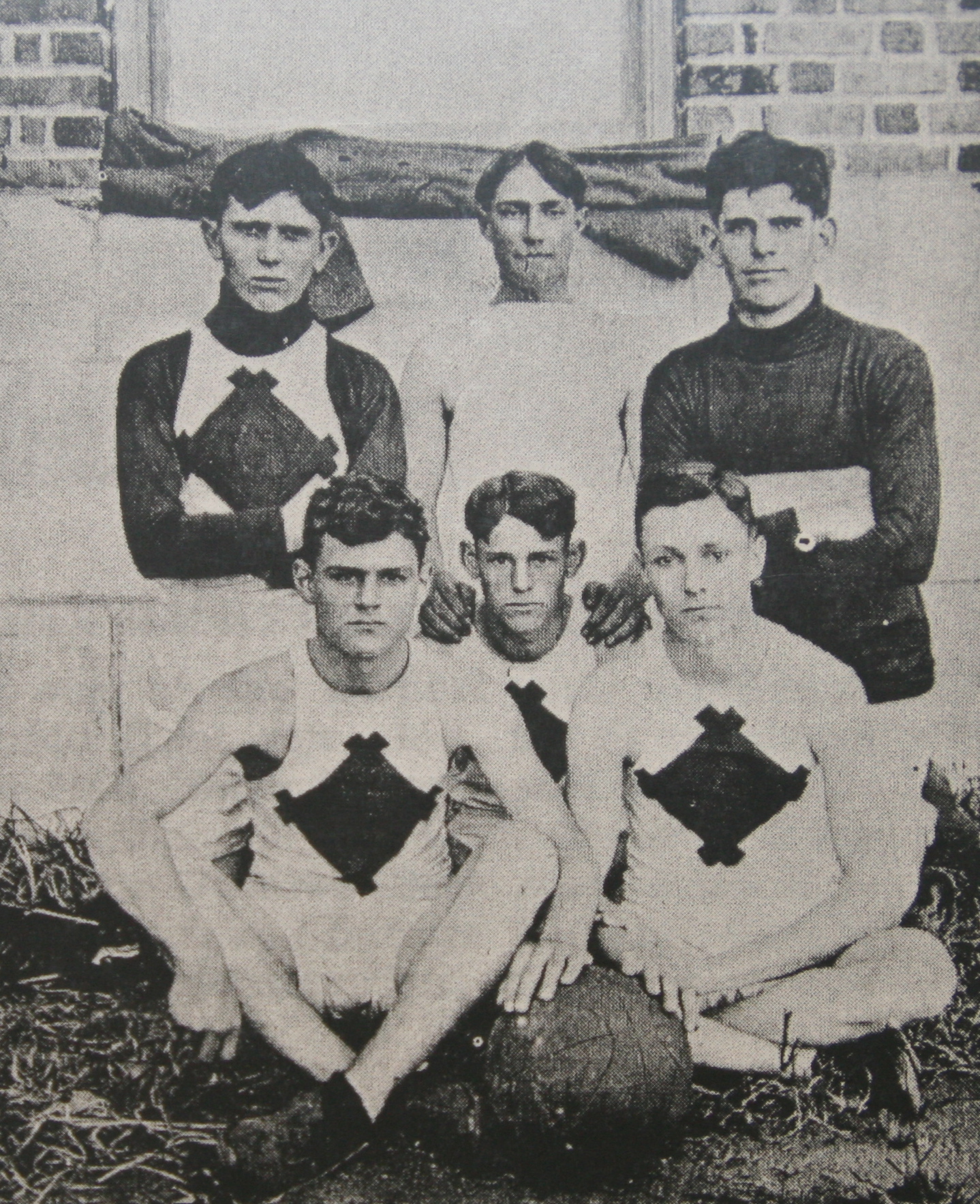
Skeet moved to Hopkins at some point in his young life. In 1913, he was a member of the Hopkins High School basketball team.
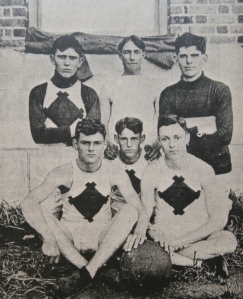
Skeet Rickard, front left

Skeet Rickard, front left

He went on to pharmacy school, graduating with honors, and passed the Missouri Board of Pharmacy on June 12, 1916.

Later that year, he began working at The Owl drugstore in Hopkins.

Skeet enlisted in the US Navy on May 18, 1918, and was a pharmacist’s mate during World War I. He was released on August 29, 1919, and returned to Hopkins and to The Owl.

He was the Hopkins White Sox baseball team manager and played shortstop in 1922 and then played second base for the Hopkins Towners in 1924.

In 1923, he and Oliver Lewis, then co-owners of The Owl, purchased a building where Lewis opened Herbert-Gray Drug while Skeet stayed at The Owl.

Then in 1929, Skeet purchased Herbert Drug and moved the stock to a new location on the north side of Barnard Street where he opened Rickard Rexall Drug. He installed the “latest” in fountain equipment and several years later added an ice cream making machine.

Skeet and Gladys

On May 23, 1930, Skeet and Gladys were married in King City.

Gladys had worked as the city clerk in Clarinda before they were married. She then joined her husband at the drugstore.

Anna Cross, former owner of the Hopkins Journal, and her daughter, Sharon Bonnett, remembered the Rickards as being conservative, hard-working people who were “always” at the drugstore. Skeet was more outgoing and personable than was Gladys.

“I think Skeet was well liked in Hopkins. He became involved in a lot of the town’s endeavors,” Cross said. “And I think of Gladys as a serious-minded, all-business woman.”

The drugstore

The drugstore was a gathering place, Bonnett said, and the old-fashioned soda fountain was an attraction.

“The drugstore was at the bottom of schoolhouse hill,” Bonnett said. “The kids who lived in town would go to the drugstore for ice cream or a soda drink or candy every night before they headed home, if they could afford it.”

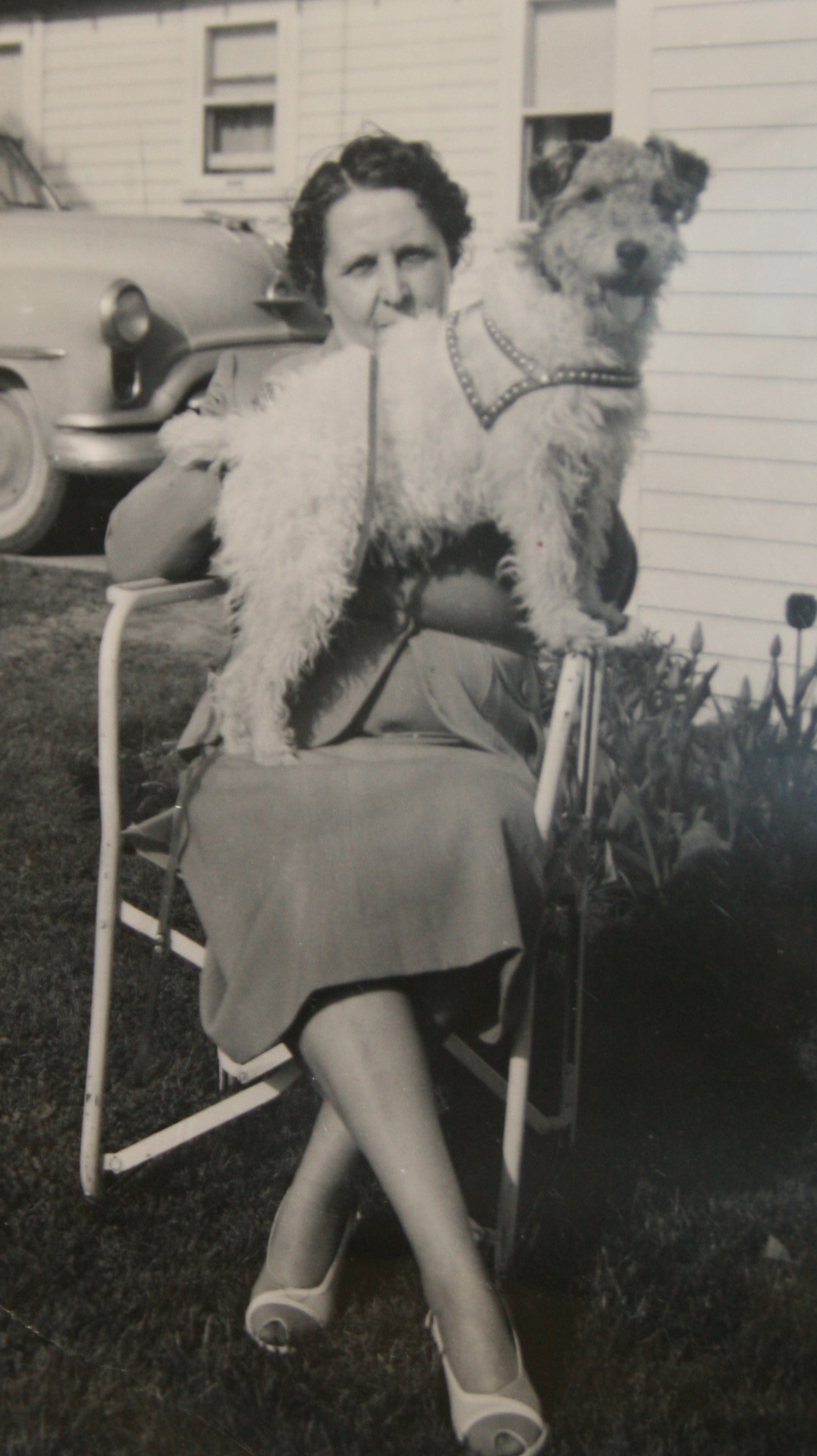
The Rickards did not have any children, Cross said, but always had a dog that they considered family. And the dog was always with them in the drugstore, Bonnett added.
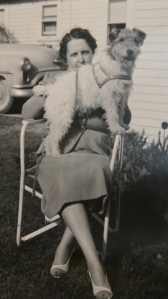
Gladys Rickard and her dog

Gladys Rickard and her dog

“What I remember most about Gladys is her love of dogs,” Bonnett said. “I don’t remember her looking forward to children visiting their store, but I would go to the back where the pharmacy was because that’s where the dog was. She kind of liked me because I liked her dog.”

Community service

The Rickards owned a two-story home on schoolhouse hill and were both involved in the community during their time in Hopkins.

They attended the Christian Church in Hopkins.

Skeet was elected mayor in 1934.

He was a charter member of the newly formed Glen Ulmer Post No. 288 on October 9, 1939, and Gladys was a charter member of the American Legion Auxiliary.

Skeet was also a 50-year member of the Xenia Masonic Lodge and Gladys was a member of the Eastern Star, Art Club, Hilltop Club, Hopkins Historical Society, CWF and the Hopkins Organ Club. She also played bridge.

“I don’t know how active she was in any of those organizations but she was a member,” Cross said. “Skeet was much more active.”

Later on

In 1948, Skeet purchased the Shamrock Inn north of Hopkins and sold it seven months later to Roy and Rose Burri who opened State Line Oil and Cafe.

Then after 25 years of operating Rickard Rexall Drug, they sold the drugstore to Mr. and Mrs. Clell Corum on March 1, 1953.

Skeet then served as president of the Hopkins State Bank when it opened on March 5, 1955, and Gladys also worked there as a teller.

After they retired, the Rickards moved to Arizona. Skeet died at the age of 86 on October 31, 1982, in Phoenix.

Following his death, Gladys returned to Hopkins and then moved to Maryville. She died September 7, 2002, at the age of 104.
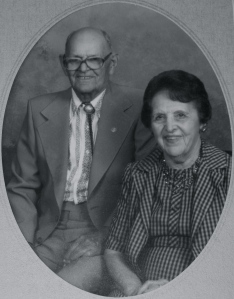
Skeet and Gladys Rickard

Skeet and Gladys Rickard

The trust

Hopkins native Ed Mutti, who serves as a trustee for The Gladys M. Rickard Charitable Trust, said his mother and Gladys were good friends. After Skeet’s death, he prepared her taxes for her.

“She was always very good to me,” he said. “They were really hard working. And they spent hours in that drugstore.”

With no children to benefit from their hard work, conservatism and saving, Gladys set up a trust to assist Nodaway County residents.

“It’s touched a lot of organizations and a lot of people,” Cross said.

To date, the trust has awarded over $2 million in grant funding to organizations located in Nodaway County or which directly benefit the county.

“Their conservatism has enabled a lot of things,” Bonnett said. “Their trust has made a big difference for a lot of Nodaway County.”

Special thanks to the Hopkins Historical Society, the Nodaway County Historical Society, Anna Cross, Sharon Bonnett, Ed Mutti, Garland O’Riley and Amy Anderson.


Side Story: Nodaway County organizations receive over $2 million from trust

By Jacki Wood for the Nodaway News Leader

Over the last 10 years, The Gladys M. Rickard Charitable Trust has assisted numerous Nodaway County organizations with over $2 million in grant funding.

“Nodaway County has benefited immensely in having this resource for bettering the communities and the lives of our residents,” Jessica J. Loch, Rickard board member, said. “Since December 2004, $2,449,616 has been given out.”

Floyd L. “Skeet” and Gladys M. Rickard lived in Hopkins for many years, were involved in the community and owned the Rickard Rexall Drug in town from 1929 to 1953.

Following the death of Gladys in 2002, the trust was funded on May 15, 2004, with the first awards given out in December of that year.

“The purpose of the trust is to award grant monies to 501©(3) organizations that are located in Nodaway County or directly benefit Nodaway County,” John W. Baker Jr. said, who along with Loch and Edward Mutti Jr., also serves on the board of trustees.

Some of the organizations that have received funding from the trust include the Hopkins Community Club, the Children and Family Center, New Nodaway Humane Society, Habitat for Humanity, Hopkins Historical Society, Nodaway County Historical Society, The Ministry Center, Mozingo Lake and Maryville Park and Rec, Camp Quality, North Nodaway, Eugene Field Elementary, Maryville Middle School, Community Services, Clearmont Community Club, Lifeline, Big Brothers Big Sisters, Nodaway County Senior Center, St. Francis Hospital and Foundation, SSM Hospice Foundation, Toys for Tots, United Way, Nodaway Community Theater Company, NOCOMO, Nodaway Chorale, JFK Recreation Center, Children’s Mercy Hospital and Maryville Public Library.

“The citizens of Nodaway County are very proud of their farms, homes and towns,” Loch said. “I’m always impressed that when something needs doing, such as the community center buildings or parks or safety and health needs, the residents rally and get it done.

“Getting assistance with the Rickard funds makes it easier to see that a goal can be met and maybe is a shot in the arm to accomplishing it.”

Loch said the trustees look at certain factors in determining who receives grant funding, including: is the use of money for non-consumable items that will be used for a period of time; is it an established program that has proven it is sustainable; how large is the population that will be served and what is the diversity of the population; is it an organizations that does good work but might not have other sources of funding.

The trust also sometimes requires matching funds from the recipients, Loch said.

“The imagination and care shown in resolving needs and issues in the county is endless,” she said. “One cannot describe the joy there is in being ‘Santa Claus.’ The thank you letters of appreciation we receive are heartfelt in describing how many families are aided by Community Services for rent assistance, Toys for Tots, hospice care, elderly housing and Lifeline. I am very fortunate to serve on this trust.”

The trustees usually meet in June and November to evaluate requests and make a decision on grant awards. Funds must be distributed by the end of the year to satisfy IRS requirements.

Baker said the amount that the trust is worth depends on the stock market. As of December 31, 2013, the value was $5.5 million.

“By IRS guidelines, we must set aside an amount equal to at least five percent of the twelve-month average fair market value of the trust assets,” he said, which determines how much is awarded each year.

Applications for grant funding can be obtained from Diane Thomsen, Strong and Strong Law Office, 124 East Third, Maryville, and must be submitted by May 1 and November 1 each year.

KC Chiefs Head Coach Andy Reid talks family, faith and football

That they might have joy column, NNL, by Jacki Wood

I have admittedly never been a Kansas City Chiefs fan.

But that changed a bit last year when they hired Andy Reid as head coach, who played football at Brigham Young University. And you know how much I love my alma mater, especially BYU football.

So I was thrilled when I was invited to attend a special event with Coach Reid and his wife, Tammy, this past weekend at The Church of Jesus Christ of Latter-day Saints in Platte City.

It was promoted as an evening of “Family, Faith and Football.” And the Reids did not disappoint to the approximately 800 people in attendance with plenty of laughs and stories from their lives and his coaching career.

Tammy started by sharing their family history. They met in a tennis class at BYU and began dating. She was a member of The Church of Jesus Christ of Latter-day Saints; he was not. They both returned to their homes that summer, Tammy to Arizona and Andy to California, where he began learning more about her church and was eventually baptized.

They both returned to BYU, and a year later, they were married. They have five children, born in five different states due to his various coaching stints, and one grandchild.

She talked about ways their faith has helped their family over the years including the death of their son, Garrett, who died of an accidental heroine overdose a year and a half ago.

“We know that we came from a loving Heavenly Father who sent us to this earth to be tested…and we know we will one day see him again,” she said. “That’s what got us through that really huge trial in our lives.”

Then Coach Reid shared a PowerPoint he presented to his players last week to get ready for the upcoming season.

“We are the Chiefs,” he said. “And we’re going to be a little bit different.”

He continued: “There’s a small margin of victory in the NFL. What are we going to do differently to go win the trophy?”

He talked to his players about practical, simple principles that will help them be a little different, to get to the Super Bowl and to “get that ring” this year.

He told the audience that those same principles he shared with his players are similar to what is taught in his faith and are applicable to everyone.

“Football is a microcosm of life,” he said.

Some of the principles included sacrifice, training, trust and working to win.

Sacrifice: Every team is talented; you have to give up something to get a lot, on and off the field.

Training: Conditioning and knowledge can help you dominate.

Trust: Working hard as a team brings mutual respect for one another. Trust = wins. Players come in as teammates and leave as family.

Work to win: Give your best every day.

Coach Reid concluded by saying: “Surround yourself with greatness. I’ve been fortunate to be surrounded by great people and I love every minute of it. I jump out of bed early in the morning and I am ready to rock and roll.”

I love that. How many of us are jumping out of bed every morning, excited to tackle to day.

We have to be a little different. And we have to be willing to give up a little to get a lot.


Relay For Life: Osborns work together to fight cancer and move on

Feature for the NNL by Jacki Wood


Audrey Osborn had been engaged just four months when her husband, Joel, was diagnosed with testicular cancer in 2009.

They were both just 24 years old at the time.

“I remember I was in the athletic offices on campus,” Audrey said. “We were both graduate assistants at the time. And he came up and told me that they had found a lump and the doctor was pretty positive it was cancerous.

“He was very calm and positive about it. It honestly didn’t even hit me at the time because he was so optimistic about it. That was his attitude throughout his entire journey, always positive, never felt sorry for himself, he just knew in his mind that he would beat it and be fine. His attitude made it very easy on me in the beginning because we just went on with our lives like nothing was wrong.”

That was in November, and the following summer, the two were married. They found out on their honeymoon that Joel – the former Northwest Missouri State quarterback and current assistant coach – would need to start chemotherapy when they returned.

“He completed four rounds of chemo, and even after his first round, he was still going about life as normal,” Audrey said. “It really wasn’t until the second round that it started taking a toll on him.”

The caregiver role

Joel started losing his hair, his energy decreased, his appetite changed and there were times when he would get pretty sick.

And that’s when Audrey stepped in with her role as caregiver for her new husband.

“God works in mysterious ways,” she said. “I just so happened to be in between jobs at the time so I was able to go with him every day to chemo. What a blessing that was. I don’t know how we could have planned that any better. God was definitely watching over us during that time.”

She said her role as caregiver was to be his rock.

“We left all the drama out of everything and just did what we had to do when we had to do it,” she said. “We both always had the mindset that this is how it is now, but we’ll get past this and move on. I just did whatever he needed me to do. That’s part of the deal, ‘in sickness and in health.’ He would have done the same for me.”

As bad as Joel felt toward the end of his treatments, it was football season and he was a graduate assistant. Audrey said he felt he had a job to do and so he never missed a game.

“That just goes to show you how dedicated he is and how loyal he is,” she said.

His last round of chemo finished up around his 25th birthday in October of 2010, right in the middle of the season.

During that time, Audrey said they looked to their family, especially their parents, and their good friends for support.

“They did everything they could to help out and were always there to talk to, to lean on and give encouragement,” she said. “Our Bearcat family was awesome during this time, too. The coaches and their wives were nothing but supportive and helped out any way they could. They brought us meals and drove Joel to appointments if I couldn’t.

“We are honestly so blessed to be a part of the Bearcat family.”

Relay For Life

Since Joel’s diagnosis, the couple has walked with a team each year. His parents started a team in his hometown of Harlan, IA. They go up there and walk with them when they can, in honor of Joel as well as in the memory of his Grandma Osborn and his Grandpa Blum.

The Bearcat athletic office also has a team the Osborns have been a part of in the past. And they have also participated in the Survivor Dinner.

“Relay is a chance for us to take a break from our crazy schedules and remember what Joel went through and what so many others are going through,” she said. “It brings you back to reality and reminds us how thankful we are that Joel is still in remission four years later.”

And Relay is also a time for everyone to be on the same team, Audrey said.

“You realize that cancer affects just about every family in one way or another,” she said. “You get to spend the day with your community, maybe someone you see at Hy-Vee or someone that you run into at the Community Center, and it reminds you that in reality, we’re all here for each other.

“It also reminds you that you don’t always know someone else’s story, what someone else is going through. It’s just a great way to show your support for everyone in the community.”

The Nodaway County Relay For Life event will be held Saturday, May 17, at Bearcat Stadium. For more information, visit facebook.com/RelayForLifeOfNodawayCounty.


Hate is heavy

Blog post:

There are days when I feel like I hate everything and everyone. My family probably feels like that’s every day 🙂

I hate my body. I hate my pain. I hate my bed. I hate my room. I hate the color on the walls. I hate that I live in this town. I hate purple socks. I hate all socks. I hate yogurt and turkey bacon. I hate how I feel after eating Reese’s eggs for breakfast instead of the yogurt and turkey bacon. (Who am I kidding? Reese’s eggs for breakfast rocks. Ha!) I hate stupid commercials on tv. I hate the color red. I hate annoying people. I hate happy people. I hate perfect people. I hate the people that love me. I hate hate hate hate hate…

But the hate makes it all worse. The emotional feelings make me feel physically worse.

And so I have to take a step back and realize what I’m doing. And I have to look for love.

I love the people who love me. I love the fact that I have a bed. I love that I have an iPad, social media, music, tv and the Internet.

I love that I’m not alone. I know there are other people out there who feel the same as I do, which is why I’m writing this blog. I love that we can provide one another hope. I love that I can write.

Hate is heavy, it weighs us down, it’s dark, it is destructive.

My bedroom, where I spend much of my time, is pretty dark. I have these great curtains that keep the light out in the hopes that I can get more sleep. I was lying in bed today when I heard a storm rolling through – I love thunderstorms – so I decided to pull back the curtains and open the blinds. And then I noticed something. The tree in our front yard is in full-on popcorn popping mode – full bloom – and beautiful. I looked around and noticed the neighbor’s bush bursting with red and the first few dandelions poking their heads up from the ground. And then I watched it rain. It was so refreshing. Soon the storm was over, the sun peeked out from behind the clouds and light filled my room.

It surprised me how much I enjoyed it, with how bad I am feeling today, and it reminded me how important light can be to us.

When we’re knee-deep in the mud of whatever it is we’re slogging through in life, it’s sometimes hard to remember that it’s only temporary. It may not be today or tomorrow or in the next 10, 20 or even 50 years. But it will get better. The sun will return and we will enjoy its warmth shining down upon us.

So look for the good. Look for love and look to the light. It will lift us up. I BELIEVE that it will.

Dieter. F. Uchtdorf said: “Healing comes when we move away from the darkness and walk toward the hope of a brighter light.”

Pull back the curtains and see what you can see. It just might surprise you.


“I will not fail thee, nor forsake thee.”

Blog post:

During the 1968 Olympics in Mexico City, John Stephen Akhwari placed last in the marathon, yet major sports magazines named him as one of two “top international Olympians” that year. While losing the race, Mr. Akhwari won the admiration of untold thousands because he embodied the spirit of a true Olympian as he finished despite setbacks.

Track and field athletes that year faced a common challenge when they arrived in Mexico City: its altitude. At 7,350 feet, it was the highest elevation at which any Summer Olympics had been held. From Mbulu, Tanzania, where the altitude is -3.85 feet, Mr. Akhwari suffered leg cramps early in the race. Yet he continued to run. He collided with another runner and fell, dislocating and badly cutting a knee and injuring a shoulder. He got up and he continued to run.

By sunset, most of his 56 fellow competitors had finished the race. Wounded and in pain, he continued to run. Most spectators had left the arena where the marathon’s finish line was located. Those who remained noticed lights flashing on a vehicle escorting a lone runner and cheered as the Tanzanian hobbled along the track in his own victory lap to cross the finish line more than an hour after the winner.

It’s doubted that anyone present realized they were witnessing a great moment in the history of the Olympics. Many journalists and people posting on various media have told the story of Mr. Akhwari’s personal victory.

In a New York Times article upon the death of Bud Greenspan in 2010 is this account: “Mr. Greenspan, an eight-time Emmy Award winner, often distilled his view of the Olympics into an incident from the 1968 Summer Games in Mexico City. He was filming the marathon.

“What mesmerized him was John Stephen Akhwari of Tanzania. … When Mr. Greenspan asked him why he continued to the end, Mr. Akhwari was incredulous at such a question. ‘My country did not send me 5,000 miles to start the race…My country sent me 5,000 miles to finish the race.’” 

I teach a women’s class at church one Sunday a month and today my lesson was about enduring to the end through our trials. I felt some of it was very timely with my life and this blog so I thought I would share. I started the lesson with the story about John Akhwari (I love the Olympics and I love this story). The lesson was based on remarks given by Thomas S. Monson this past October.

He said: “The difficulties which come to us present us with the real test of our ability to endure. A fundamental question remains to be answered by each of us: Shall I falter, or shall I finish? Some do falter as they find themselves unable to rise above their challenges. To finish involves enduring to the very end of life itself.”

He continued: When the pathway of life takes a cruel turn, there is the temptation to ask the question “Why me?” At times there appears to be no light at the end of the tunnel, no sunrise to end the night’s darkness. We feel encompassed by the disappointment of shattered dreams and the despair of vanished hopes. We join in uttering the biblical plea, “Is there no balm in Gilead?” We feel abandoned, heartbroken, alone…. From the bed of pain, from the pillow wet with tears, we are lifted heavenward by that divine assurance and precious promise: “I will not fail thee, nor forsake thee” (Joshua 1:5).

He said: “We know that there are times when we will experience heartbreaking sorrow, when we will grieve, and when we may be tested to our limits. However, such difficulties allow us to change for the better, to rebuild our lives in the way our Heavenly Father teaches us, and to become something different from what we were—better than we were, more understanding than we were, more empathetic than we were.”

It’s hard, though, to rise above it when we’re trudging through the mud of difficulties. It’s easy for us to retreat to our rooms in defeat and wait until it’s over. But I BELIEVE we can endure it, and endure it well. We might need a little help from one another, a little understanding, a little more encouragement from one another. Because in the end, just like John Akhwari, we weren’t sent here just to start the race.

In speaking of Akhwari, Robert D. Hales said:  “He knew who he was—an athlete representing the country of Tanzania. He knew his purpose—to finish the race. He knew that he had to endure to the finish, so that he could honorably return home to Tanzania. Our mission in life is much the same. We were not sent by Father in Heaven just to be born. We were sent to endure and return to Him with honor.”


How are you feeling?” – Ugh!

I get tired of people asking me if I “feel better.” Or even how I’m “feeling.”

People don’t really want an honest answer to that. And most people don’t give an honest answer.

Fine. Ok. Good.

Those generally aren’t very honest.

I love it when people say, “It’s good to see you.”

There are a couple of ladies at church who know about my health struggles and that’s what they say when they see me. Then I don’t have to address it. And, you know, it always feels good to be seen.

Whether you’re having a terrible, horrible, no good, very bad day like Alexander … or you’re actually feeling really great and invincible, it’s always nice to know that people are happy to see you.

Fibromyalgia can be a fickle thing. I can feel fine for a few days, get a lot done, feel invincible. And then, bam, I’m down for the count.

I guess I don’t mind so much when people ask “How’s it going?” That doesn’t have to have an answer that relates to how I’m feeling. I can talk about work or the kids or whatever and not have to bring up my health.

It’s difficult for most of us to know what to say to people when they’re going through something, an illness, a trial, a time of difficulty.

How are you comforted, especially when there’s nothing you can do for someone?

I like a simple “hang in there.” It lets me know they’re thinking of me.

So whatever it is you’re going through … fibromyalgia like me or MS or dealing with a parent with dementia or a daughter with autism or a recent job loss … hang in there.

And remember this from Psalm 30:5 – “Weeping may endure for a night, but joy cometh in the morning.” I don’t know when that morning will come, but I do BELIEVE that it will come.


Help thou mine unbelief

Blog post:

My husband says it must be what a toothache feels like. You know, when you can’t get in to the dentist yet and you have to wait and the pain totally consumes you. For a day or two. Except this has lasted for 17 years now.

My forearms hurt and sometimes the palms of my hands and even my thumbs and fingers. My triceps hurt and my shoulders. My neck and all the muscles down my spine and my hips. Up and down my legs. Especially the muscles on the outside above my ankles. There are times when I feel like my ribs and spine are crushing me and I can’t breathe.

I sometimes have no strength, not even enough to hold a pen in my hand and write a note. Or stand in the kitchen long enough to cook a simple dinner. And I have tension headaches that can last for days.

And then there’s sometimes this fog. I can’t think straight. I can’t remember things, even little things. Everything is just kind of fuzzy. There are also bouts with depression.

I can’t sleep. I can’t fall asleep because I hurt so much. And I can’t stay asleep once I do. So I’m tired. Exhausted. In pain. And moody.

And consequently, I’m frequently short with my family. And then I pile guilt on top of everything else for being short with them. It’s not their fault. It’s no one’s fault. But that’s hard to remember when you hurt everywhere and you haven’t had an average night of sleep in six days.

So I retreat to my room, close the door and hide in my bed. I miss out on much of life. They go off on these fun adventures. They invite me along, but I know it won’t be fun for anyone if I go. They say it will be okay, but I know the times I’ve gone when I feel like this hasn’t been all that great for them. Or for me.

This is my life. It has been for the last 17 years. Some hours, days, weeks and months are better and some are worse than others. There are times when I feel strong and I feel I can do anything. And there are times when I feel so small and hopeless and alone.

It’s physically exhausting for me to even go out and shoot baskets, one of the things that used to bring me great joy. I try to walk on the treadmill for even half an hour and then I’m done for the rest of the day.

I do push myself, though. I push myself to go into work two days a week. And I’m grateful for laptops and iPads so I can work in bed the rest of the time. I also sometimes push myself to go to my kids’ activities. I’m happy to say I made it to every one of my daughter’s volleyball and basketball games this year. That’s really hard with the drive to games and the bleachers. Oh, the bleachers.

And I try to use laughter as much as possible. I try to find humor in the smallest of things and laugh out loud. Because laughing releases endorphins, the body’s natural feel-good chemicals, and I need every feel-good anything I can get to combat the pain.

And when I have to be in public, I try my very best to hide it all, to fake it, until I can make it back to my bed where people don’t judge me. I’ve gotten pretty good at that, faking it, I mean. But sometimes it’s all just too much to hide.

It’s been really bad the past few months. I’ve seen some pretty dark days. So I’m trying to rise above that. I struggle to know what that means though. I guess I’m trying to accept the life that’s been given to me. I don’t know if, in 17 years, I’ve actually tried to do that. I always thought it would eventually get better. But it’s hasn’t. I think it’s actually gotten worse lately, as bad as it’s ever been.

This is not the life I thought I’d be living. So what is it I’m supposed to be doing? How can I turn this so-called weakness into a strength? I don’t know yet. But I think I’m ready to try and figure it out.

And then a few hours later, I’m ready to throw in the towel again and give up.

“Jesus said unto him, If thou canst believe, all things are possible to him that believeth. And straightway the father of the child cried out, and said with tears, Lord, I believe; help thou mine unbelief” (Mark 9:23-24).

So, here we go… I believe. Help thou mine unbelief…


Too Busy For A Heart Attack

Written by Jacki Wood in the Nodaway News Leader for Heart Health Month

More women die of heart disease than all forms of cancer combined. Unfortunately, this killer isn’t as easy to see. Heart disease is often silent, hidden and misunderstood – American Heart Association

The signs had been there but they were slight, hidden even. And then there were the risk factors.

But Maryville resident Jill Hardin was too busy for a stroke, too busy for a heart attack.

“Even me, who had a father who had a stroke, sat in my kitchen and said, well, gee, I can’t go to the hospital today because I’ve got to do this, this and this.”

It was two weeks before Christmas and the 66-year-old single mother of an 11-year-old and a 14-year-old was too busy to realize what was wrong until it was almost too late.

It was Saturday and she hadn’t done the laundry yet. She’d planned on going Christmas shopping later that day. And then there was the wrapping to do and Christmas cookies she had promised to make with the girls.

“I’m thinking of all of this stuff,” she said. “And I’m trying to tell myself that even though my right hand didn’t have any feeling, even though I couldn’t see, even though I couldn’t talk, that I was fine.

“I was going to be fine. Just give me a few minutes and I’ll rally”

~

At 66, Hardin stays very active. She plants trees, flowers and bushes, mends fences and does other outside work. She refinishes floors and paints walls, ceilings and trim.

“I’m kind of a jack-of-all trades,” she said. “And I’ve just always been very active.”

She had a few underlying health problems, but they hadn’t been enough to slow her down any or make her feel like she should.

High cholesterol that she was told to watch several years ago. But nobody had said anything about it recently.

An ocular migraine she was diagnosed with a couple of years ago. No pain, just a kaleidoscope effect she would have once in a while, but nothing really to worry about.

A pain that went from her left shoulder across her chest and to her right shoulder after carrying a heavy box a couple of years ago. She thought she had just pulled something. When the pains starting happening more frequently. she was diagnosed with acid reflux.

Chest pain this winter that she noticed only when she went out to chore on a really cold morning, but went away quickly after going back inside.

And she was tired.

She told her doctor this. But she didn’t have trouble climbing stairs and she wasn’t short of breath, so the doctor said, maybe at 66, she might consider slowing down.

“I felt good so I didn’t see any reason to slow down,” she said. “I had things to do. And I’ve never been to a doctor who was concerned about anything, and when I had a complaint, there was always some other reason.”

~

That Saturday morning, December 14, 2013, she had been busy doing her regular morning activities when she suddenly experienced one of those ocular migraines.

“I couldn’t see clearly. I tried to talk, I tried to continue to communicate, but I couldn’t.”

Thankfully, a friend was at the house.

“He kept saying he couldn’t understand me. I was fighting to see and I was trying to talk and then I gave up.”

She grabbed a bottle of aspirin, and when she went to get the pill out of her palm, she noticed her right hand didn’t have any feeling in it.

“We debated for a while whether to take me to the hospital or not,” she said. “I’m saying to myself, come on, there’s nothing wrong with me.”

~

Hardin said she wants to share her story to help other women.

“Just because you’re healthy doesn’t mean you’re healthy,” she said.

There were warning signs. One of the most important symptoms for women is exhaustion, she said.

“But how many women aren’t exhausted?”

She said a woman today generally has a job, but she also usually has most of the responsibilities in the home including meals  and laundry and running the kids to activities.

“She’s tired,” Hardin said. “And she doesn’t know when she’s really tired.”

~

On that Saturday morning, after some convincing from her friend, she finally agreed to go to the hospital.

“The doctor there saw a woman who was healthy having a few problems with her speech but not a lot,” she said.

He said she was probably having a TIA, or transient ischemic attack, which is when the blood flow to a part of the brain stops for a brief period of time. He told her she might have them from time to time or not at all, but he wanted her to stay overnight.

Then he called a doctor in neurology, who said she needed to be transferred to a stroke center right away.

She traveled to St. Luke’s by ambulance – after being convinced driving herself in her pick-up was not a good idea – and was swarmed with doctors who asked lots of questions about her previous diagnoses, her symptoms and her family history.

After days of testing, a double bypass heart surgery, a carotid endarterectomy (a surgery used to prevent strokes in those who have carotid artery disease) and nine days at St. Luke’s, Hardin was finally able to come home two days before Christmas.

~

“I was very lucky. I’m very fortunate. I think the thing that saved me was that I have always been very active.”

Looking back, Hardin realizes the signs were there.

“It was different this year,” she said. “I was slower to rally. And my enthusiasm was down.”

But being a single parent, if she didn’t do the things that needed to be done, no one else was going to, she said. So she made herself do them.

“I was tired, though, exhausted,” she said. “And I knew it was different.”

~

She’s now undergoing cardiac rehab through St. Francis Hospital in Maryville and realizes some changes need to be made.

But she really wants other women to learn from her story.

“I’m just glad I’m here,” she said. “And I hope I can wake up some other women because this is important. I want them to think, wow, maybe I ought to think about me for a change.”


Football teams exemplify more than perfect record

By Jacki Wood, written for the Nodaway News Leader’s special Title Town keepsake edition

Perfection. The highest degree of proficiency, skill or excellence.

While every moment, play or game might not have been perfect throughout the Maryville Middle School, Maryville High School and Northwest football season, the 60-0 perfect record stands out among all teams across the state and even the country.

But what if the season was more than the 60-0 perfect record?

Northwest Missouri Fellowship of Christian Athletes Area Representative Trevor Nashleanas, who works with many of the Northwest and Maryville coaches and athletes, said having a perfect record at all levels of football was a tremendous joy for him.

But, he said, the season was more than the wins.

“In light of Coach T’s retirement, Coach Bostwick’s death and the legal turmoil concerning a former Spoofhound athlete, these teams have truly stuck together,” Nashleanas said. “They’ve weathered the storms, fought for one another and matured as young men in the process. I know God has used it to bring people to Jesus, which is the biggest win of all.”

The Coaches

Nashleanas said his one focus is to help coaches and student-athletes recognize their need for the Lord, believe in the person and work of Jesus Christ and live for God.

“The focus of the (FCA) ministry has shifted from the athletes to the coach,” he said. “Our philosophy is to ‘impact the world for Jesus Christ by ministering to and through coaches.’ World famous evangelist Billy Graham once said that ‘one coach will influence more people in one year than most will in a lifetime.’”

For that reason, Nashleanas said, they now focus on 3-D or 3-Dimensional Coaching which includes physical, psychological and spiritual aspects.

“The goal is to help coaches identify a God-given reason for coaching beyond just wins and losses,” he said.

Maryville High School Head Coach Matt Webb and Northwest Missouri State Wide Receivers Coach Joel Osborn have been instrumental in helping to share FCA’s vision.

“Coach Webb and Coach Osborn are both outstanding men,” he said. “They lead with integrity, care with sincerity and coach with character. Both are very supportive of what the Lord is doing through FCA and both do their part to help players grow into men who will live and lead well. They, as well as other members of the Bearcat and Spoofhound coaching staffs, have a tremendously positive and lifelong influence on the men they coach, myself included.”

The Players

Nashleanas said the coaches have established player’s counsels for accountability and character development among their senior leaders or captains and some require players to read books about team unity, sportsmanship and character.

“This is important because a student is an athlete for a few years at most, but he or she is a citizen for a lifetime,” he said. “It teaches coaches to treat players with dignity and prepares athletes for success in life.”

The Spoofhounds have had an FCA Impact Program for the last two years, which the athletes lead for spiritual and character development through peer-to-peer relationships.

“It’s a volunteer program and most of the team participates,” he said. “I’d imagine that it’s a big part of the team’s success.”

He said he’s also seen significant changes in recent years among the Bearcat football players who are involved with FCA including a significant drop in off-the-field issues with alcohol and misbehavior, an increase in sportsmanship on the field, more team unity and a more intentional focus on what God wants them to do to contribute to the community during their time at Northwest and when they graduate.

“By God’s grace, they’ve turned to the Lord,” he said. “And with the help of FCA, (they) have become godly men who are serving the church and the city well.”

Perfection

Nashleanas said the perfect 60-0 season is a fun rarity in sports that should be enjoyed and celebrated. But unfortunately, it can leave some with the expectation that perfection is something that can also be achieved in life.

“This only leads to pride and anxiety for those who momentarily achieve it but can’t ever keep it,” he said. “Or despair and shame for those who know they’ve already fallen short and don’t even want to try.

“God’s good news is that our ‘standing’ in his sight is not dependent on our performance or our perfection. Thanks to Jesus, we don’t have to beat ourselves up when our performance fails to meet God’s standards, because he already took a beating for us (the cross) to make up for our failures, shortcomings and disappointments.”

He said the athletes who believe this truth ultimately perform better because the pressure is off them.

“Jesus carried the weight of missed passes, fumbled footballs and impossible standards when he died on the cross,” he said. “On the field, perfection is achieved with a perfect record. In life, it is received by faith in what Jesus has done to give us his perfect record.

“A perfect record is a momentary pleasure worth celebrating until next season. A perfect record received in Christ is an eternal joy worth celebrating in God’s presence forever.”