‘Add color to otherwise black and white memories’

baa98cd1407a62b468bbd9e28af1f66c

Peninah

“Do what you can, with what you’ve got, where you are.”

It’s a quote from Squire Bill Widener, although widely misattributed to Theodore Roosevelt who shared it in his autobiography.

Over the past year, it has kept me moving forward.

Because of my health issues, and the fact that I spend most of my life in bed now, I’ve been trying to focus on what I can do, with what I have, and with where I’m at.

One thing I’ve recently discovered I can do is family history. I mean, I can’t go out and wander around cemeteries. But I’ve got a laptop and the internet.

Growing up, my grandma was very into genealogy. My mom, too, and then my younger sister as well. I had no interest in it whatsoever.

One day last fall, however, trying to figure out what I can do, with what I have, where I’m at, family history popped into my head. And I decided to give it a go.

I’m still learning. And I don’t spend as much time with it as I’d like. But finding my ancestors and learning their stories and making connections that hadn’t yet been discovered by our family has been quite life-changing.

One connection is from my Eckerson family line. America Pulliam jumped out at me because of her patriotic name. She died in 1905 in Sullivan County, MO. The work that had previously been done by my grandma had ended with her. We didn’t know who her parents were so I started digging.

After several weeks of searching and working, I found them. And that opened up several lines, one going back 27 generations to Guillaume DeBray who was born in 1054 in England.

The line from America to Guillaume included other ancestors such as Captain Thomas Warren, born in Kent, England, who came to Virginia in 1640 and purchased land from Thomas Rolfe, the son of John Rolfe and Pocahontas. And 1st Baron Edmund Braye, born in 1484, who was in attendance when King Henry VIII and King Francois I met following the Anglo-French Treaty of 1514.

Another fascinating story for me has been from my husband’s side.

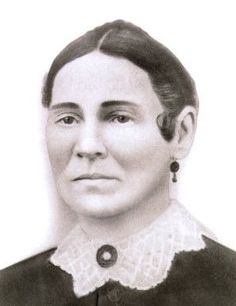
The granddaughter of a Cherokee Indian and a descendant of those who came on the Mayflower, Peninah Cotton was born in 1827 in Illinois. She married Daniel Wood, and because of their Mormon faith, they were driven out of their home by a mob, leaving behind everything they couldn’t carry and journeyed westward to escape persecution. They arrived in Salt Lake in 1848 and Daniel later founded the community of Woods Cross, Utah.

I’ve also found I’m related to several famous people through a fun family history website, RelativeFinder.org. I’m cousins with Walt Disney, Mark Twain, Henry David Thoreau and Orville and Wilbur Wright as well as several US Presidents including FDR, John Adams, William Howard Taft and a few more.

In just the few short months since I began this new adventure, it’s also been fun to share these stories with my kids.

A study conducted at Emory University and published in 2010 found the more children knew about their family history, the higher their self-esteem and the better able they were to deal with the effects of stress.

“Family stories provide a sense of identity through time and help children understand who they are in the world,” the researchers said.

During RootsTech 2016, a global family history event, blogger Miryelle Resek wrote: “For many of us, the thrill of researching our ancestors comes from learning about their stories. Glimpses of what their everyday life looked like, the challenges they overcame and the hopes and dreams they worked toward add color to otherwise black and white memories.”

Reading from Daniel Wood’s journal and how difficult the journey to Utah was for them helps our family have strength to get through rough times.

Maya Angelou said: “We are braver and wiser because they existed, those strong women and strong men. We are who we are because they were who they were.”

So if I’ve piqued your interest at all in family history, you can get started at familysearch.org and/or ancestry.com.

If your history includes Nodaway County, the historical society is a valuable resource and is open from 1 to 4 pm, Tuesday to Friday, or by appointment. Call 660.582.8176 for more information.

There’s also a Family History Center at the LDS Church in Maryville. Call 660.541.0124 and leave a message.

Several local genealogists are also willing to help including Mandi Brown who can be contacted at brownmandi0911@yahoo.com.

So get out there and start digging. Explore where you came from, link your past to your present and build a bridge to your future. You won’t regret it.

Save

Save


Get crafty with simple mason jar projects

The Summer of Pinterest, Part 1 …

PinterestLogo

By Jacki Wood for the Nodaway News Leader

Have you ever tried a project, idea or recipe you found on Pinterest … and it didn’t come out quite like you’d hoped?

You’re not alone.

Branded as the world’s catalog of ideas, Pinterest users can “pin” ideas to try, but many find themselves disappointed at the end result.

There’s even an entire Pinterest Fail website, “where good intentions come to die,” devoted to Pinterest lovers who have shared projects that failed. And there are plenty of posts all across social media of hilarious failures.

So we thought it would be fun to do a little experimenting of our own this summer. And I convinced (forced) my family to help me out.

I’ve been pinning ideas on Pinterest for about five years now and have tried well over 100 recipes as well as ideas for home improvement, family reunions, hairstyles and even road trips.

This series will focus on several different ideas perfect for the summertime for you and your family. And we’ll see if they actually turn out perfectly. Or if we need to add it to the Pinterest Fail website.

We’re starting with a pretty ordinary object that can be transformed into a ton of different ideas for every corner of your home and summertime activity – mason jars.

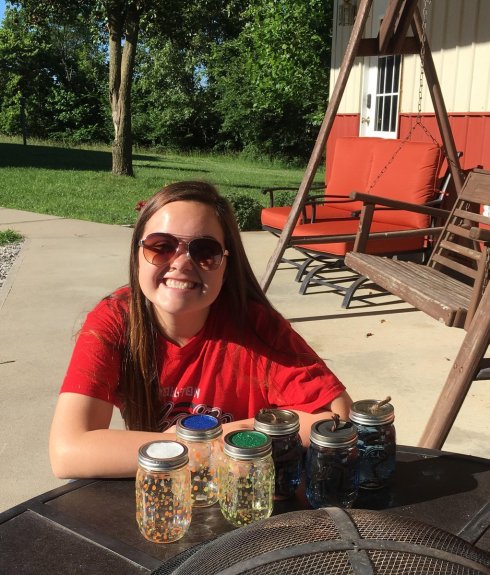
My 15-year-old daughter, Hannah, helped me pick out two mason jar projects from the NNL’s So Crafty Pinterest board. We thought the Mason Jar Fairy Lights and the Mason Jar Citronella Candles would be fun to have when she has friends over for a summer party.

ClaPDjZUYAA88ph

Mason Jar Fairy Lights

This idea came from the DIY Joy website. It was very simple and easy to follow with both a how-to video as well as step-by-step written instructions with photos.

The website says: “this cool glow in the dark craft is a neat project idea for kids and teens. These fairy glow jars are fun for after-dark outdoors ideas but they also make great DIY home decor for kids rooms or dorm decor.”

      Materials:

  • Mason Jar (any clean jar will do)
  • Glow in the Dark Paint (use several different colors)
  • Paintbrushes (preferably longer ones that reach to the bottom of the jar)
  • Scrap Paper
  • White School Glue (optional)
  • Glitter (optional)

Hannah had no trouble with this project at all. It was quick and easy and she was pleased with how they turned out. And it was relatively inexpensive, especially if you have old jars lying around.

ClaPCwlUsAAeOf_

Mason Jar Citronella Candles

This idea came from MartysMusings.net. It was also very simple with step-by-step instructions and photos. And it provides a very cheap alternative to keep the mosquitoes away this summer.

      Materials:

  • Mason Jar (or any glass jar) with lid and ring
  • Citronella Torch Fuel
  • 1/8″ Lamp Wicks
  • Nail Punch, Screwdriver or a Nail and Hammer

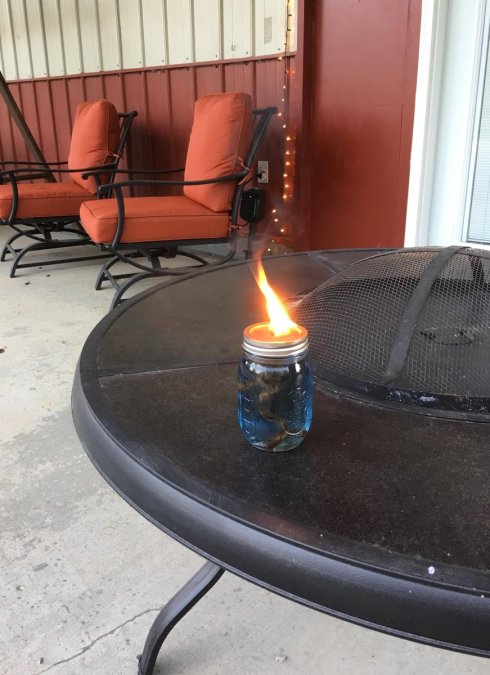
This was also very quick and easy for Hannah. Our local Wal-Mart didn’t have the lamp wicks so we purchased thick twine as well as tiki torch wicks to try. The torch wicks were too big, especially for pint jars. And even the twine was perhaps a bit too big. On a windy day, the flame got a little big. But as long as it’s not left unattended, I think it would be fine.

Additional mason jar ideas can be found on the NNL’s “So Crafty” Pinterest page including bird feeders, soap dispensers, home decor, gifts in a jar and much more.

For these and other crafty ideas, visit pinterest.com/nodawaynews/so-crafty.


‘I am still worth the full 20 dollars’

By Jacki Wood, “That they might have joy” column for the Nodaway News Leader

200555057-001

Our family recently returned from a two-week summer road trip to California to see family, visit the beach, Disneyland, our favorite restaurants and some new things, too.

We love to road trip and I could write for days about the adventures we had. But for this column, I’d like to share something we’ve started doing recently – packing comfort kits to pass out if we come across someone in need along our way.

It didn’t take long to hand out the first one on this trip. We were approached by a man at a gas station in New Mexico. He was asking for money but we offered him the Ziploc of food, water and essentials. He quickly opened the bag, grabbed the crackers and thanked us as he began devouring the food.

The exchange was a bit bizarre but he was obviously hungry and we were happy to help.

This topic – helping the homeless who stand outside of a business or along a highway off ramp – seems to be somewhat of a controversial subject.

Some people say they’re just trying to take advantage of us, that they beg all day long and then go home to a comfortable life.

In my very limited experience, I do not believe that to be true in most cases. I’m not naive enough to think that it doesn’t happen. But I feel there are many people who could use a little help.

I shared a story last Thanksgiving on my Facebook page that reaffirmed my stance for helping those in need. Here’s a portion of what I wrote then:

***

His hands were rough and cold, surprisingly cold, on an unusually warm November day.

I had stopped in Cameron to fill up with gas on the way to my mom’s for Thanksgiving and he was standing on the corner shivering.

“I’m Jacki,” I said, as I stuck my hand out to shake his.

“Dennis,” he said.

He seemed shy, hesitant, ashamed.

“Where are you headed?” I asked, reading his cardboard sign.

“South.”

Dennis was a veteran. He had served during the 1970s and had been in Omaha for a medical procedure. Now he was trying to “get someplace warm,” he said.

Family? No. He had no family.

We spoke a little more and I learned he had a dry sense of humor, kind of like my dad’s. He seemed to warm up to me the longer we talked.

We had made some comfort kits as a family to keep in the car for instances just like this. The bag had ripped recently so I had taken it out to replace it but kept forgetting to put it back in the car.

When I saw Dennis, I thought it was a missed opportunity and felt I needed to talk with him.

I only spent a few moments with him. I don’t know his whole story. I don’t know what specific circumstances and choices led to him being there in that situation. But I do know that he is my brother and I wanted to help him.

I gave him a little money (something I normally do not do), which he humbly thanked me for with tears in his eyes, and I wished him good luck.

***

We don’t know the circumstances that lead people to stand on a corner asking for help. We haven’t walked in their shoes. But if we could just really see them for who they are, how would we act?

In a speech given at BYU in 2015, Sondra D. Heaston said: “What if we could really see into each other’s hearts? Would we understand each other better? By feeling what others feel, seeing what others see and hearing what others hear…would we treat them with more patience, more kindness and more tolerance?”

I recently read a story of a woman who had endured years of trial and sorrow. She said: “I have come to realize that I am like an old $20 bill — crumpled, torn, dirty, abused and scarred. But I am still a $20 bill. I am worth something. Even though I may not look like much and even though I have been battered and used, I am still worth the full 20 dollars.”

***

Comfort kits are easy and relatively inexpensive to make. You can find many ideas online. Ours include a pair of socks, toothbrush and paste, comb, wet wipes, water, gum and a few snack items like granola bars, crackers and cheese, tuna salad and fun fruits. There are many other essentials you could pack as well as a list of local resources and gift cards.

One site I like is the Portland Rescue Mission (portlandrescuemission.org/get-involved/learn). It shares several ways to provide practical help to the homeless.

***

The second comfort kit we handed out on our road trip was in Kansas on our way home. As I rolled down the window and asked the man if he’d like the bag, his eyes lit up with joy and gratitude.

I will never forget those eyes. I saw a glimpse into his heart.

Not that I knew his circumstances. That didn’t matter.

By serving him in that very small capacity, even though he may have been crumpled, torn, dirty and scarred, we saw that he was indeed still worth the full 20 dollars.


‘No one is born hating another person’

That they might have joy column, by Jacki Wood, written for the Nodaway News Leader

The movie “42” tells the story of Jackie Robinson who broke the color barrier in Major League Baseball in 1947.

One of the most heartbreaking scenes is when a young, white boy and his father attend a Brooklyn Dodgers game, and as Robinson takes the field, the father starts screaming, “hey nigger, we don’t want you here,” along with many others in the crowd.

Reluctantly and visibly uncomfortable about the taunts and racial slurs, the boy joins his father in yelling at Robinson.

It reminds me of Nelson Mandela in “Long Walk to Freedom” when he said: “No one is born hating another person because of the colour of his skin, his background or his religion. People must learn to hate, and if they can learn to hate, they can be taught to love, for love comes more naturally to the human heart than its opposite.”

Have you noticed how much hate their is in our country right now?

It’s everywhere.

People are angry about everything.

A CNN/ORC poll from December suggests 69 percent of Americans are either “very angry” or “somewhat angry” about the way things are going in the US.

Sixty-nine percent.

Ferguson. San Bernardino. Charleston. Black Lives Matter. White Lives Matter. Blue Lives Matter. All Lives Matter. Anti-gay, anti-Jew, anti-Muslim, anti-refugees, anti-government. Gun rights vs gun control. The very rich vs the very poor and the middle class. And the Presidential race.

Hate can be seen everywhere.

Last month, Mark Potok, editor of the SPLC’s Intelligence Report, wrote: “the number of hate and antigovernment ‘Patriot’ groups grew last year and terrorist attacks and radical plots proliferated.”

He continued: “Antigovernment militiamen, white supremacists, abortion foes, domestic Islamist radicals, neo-Nazis and lovers of the Confederate battle flag targeted police, government officials, black churchgoers, Muslims, Jews, schoolchildren, Marines, abortion providers, members of the Black Lives Matter protest movement and even drug dealers.

“They laid plans to attack courthouses, banks, festivals, funerals, schools, mosques, churches, synagogues, clinics, water treatment plants and power grids.

“The situation appears likely to get worse, not better, as the country continues to come to terms with its increasing diversity … Americans are arguably as angry as they have been in decades.”

The problem will not get better if we continue to let it grow.

In Galatians 6:7, the Apostle Paul wrote, “whatsoever a man soweth, that shall he also reap.”

Jeffrey R. Holland said: “if we sow thistles, we don’t really plan to get strawberries … we sow a little thistle and we get a lot of thistle — years and years of it, big bushes and branches of it. We never get rid of it unless we cut it out.

“If we sow a little bit of hate, before we know it we’ve reaped a lot of hate — smoldering and festering and belligerent and finally warring, malicious hate.”

So… what is so wrong with hate?

Well, first of all, we don’t have time for it. There are many great things waiting to be discovered, learned and shared that we don’t have time to waste on hate.

President Abraham Lincoln said: “No man resolved to make the most of himself can spare time for personal contention … Better give your path to a dog than be bitten by him.”

It’s also bad for our health.

Harvard-trained and board-certified cardiologist Dr. Cynthia Thaik said: “Prolonged bouts of anger can take a toll on the body in the form of high blood pressure, stress, anxiety, headaches and poor circulation. Research also shows that even one five-minute episode of anger is so stressful that it can impair your immune system for more than six hours. These can lead to more serious problems such as heart attacks and stroke.”

To overcome this, she suggests the following: acknowledge the anger, realize why, step back, deal with it, talk to someone and let it go.

In the end, however, we simply need to stop it.

“When it comes to our own prejudices and grievances, we too often justify our anger as righteous,” Dieter F. Uchtdorf said. “When it comes to hating, gossiping, ignoring, ridiculing, holding grudges or wanting to cause harm, please apply the following:

“Stop it!”

In November 2014, following the grand jury investigation in Ferguson, Benjamin Watson of the New Orleans Saints penned a Facebook post that went viral.

“Ultimately the problem is not a SKIN problem, it is a SIN problem. SIN is the reason we rebel against and … abuse our authority. SIN is the reason we are racist, prejudiced and lie.

“But I’m encouraged because God has provided a solution for sin through the his son Jesus. I’m encouraged because the Gospel gives mankind hope.”

Uchtdorf continued: “We simply have to stop judging others and replace judgmental thoughts and feelings with a heart full of love for God and His children.”

I believe this is the way.

If they can learn to hate, as Mandela said, they can be taught to love.


prescription addiction: small towns not immune to rising opioid epidemic, Part 4

By Jacki Wood, written for the Nodaway News Leader, March 2016

Editor’s note: this is the last part in the series; the names have been changed to protect their privacy.

Nine days after law enforcement officers and Family Services visited Bethany’s home and issued a stern warning to her step-father about getting help, her family moved halfway across the country.

A new state, larger city and several hospitals to frequent, her step-father’s drug abuse only worsened.

Soon thereafter, Bethany was sent to live with her grandparents where it would be “safer for her to stay.”
“That was the healthiest and best thing that ever happened in my childhood,” she said.

***

For the 2016 legislative session, Missouri State Senator Holly Rehder proposed HB 1892, a prescription drug monitoring program, after similar bills she had proposed the last couple of years failed.

During a Senate Special Committee Meeting to highlight the opioid epidemic in January, Rehder told the personal story of her daughter’s drug addiction which began with prescription painkillers.

“I tell you this story to show that drug addiction is no respecter of persons,” she said. “It crosses all socioeconomic statuses. When you go into a high school and ask the kids, ‘what do you want to be when you grow up?’ The answers are ‘a doctor,’ ‘a lawyer,’ ‘a business owner.’ None say, ‘I want to be an addict.’

“Yet addiction is the growing epidemic of our time.”

***

After Adrianna’s mom moved out and she cut ties with her, the effects of her mom’s prescription drug abuse continued to plague her.

“I struggled with depression,” she said. “My attitude toward everything became negative. And I still have trust and confidence issues.”

The one person that was supposed to teach her how to love and be loved was gone, she said.

***

In 2014, Missouri State Representative Steve Lynch helped pass legislation that allowed qualified first responders to use Naloxone, an antidote for heroin overdoses.

Lynch has filed three bills this legislative session to continue to fight opioid overdoses.

HB 1568 would allow pharmacists to dispense Naloxone to individuals.

“Massachusetts passed a similar law and saw opiate-related deaths cut nearly in half as a result,” Lynch said. “We have the opportunity to put a safe, non-addictive drug in the hands of folks who can use it to save lives.”

HB 1569 would provide immunity to those who seek medical attention for someone suffering from an overdose and HB 1570 would authorize a $5 fee for drug-related court cases to fund rehabilitation programs.

***

Emergency Department Nurse Manager Pat Giffin, RN, said SSM Health St. Francis uses Naloxone when an opioid overdose case comes to the hospital.

“The problem is getting so severe that another one of the Suggested Emergency Department Prescribing Practice Recommendations is that healthcare providers should encourage policies that allow providers to prescribe and dispense Naloxone to public health, law enforcement and families as an antidote for opioid overdoses,” she said. “We have the advantage of also having a physician who is specially trained so he can prescribe Suboxone to help those with addictions get off the opioids.”

Suboxone contains Naloxone as well as buprenorphine, a controlled substance to treat pain and addiction to narcotic pain relievers.

Another option for those dealing with opioid addiction is Methadone, a pain reliever used as part of drug addiction detox and maintenance. It is only available from certified pharmacies and there are several Methadone clinics across the state.

***

It’s been a year now since Adrianna’s mom moved out.

“I have been growing up on my own, teaching myself how to be an adult and I have missed out on so many things that I would have done with her,” she said. “She will never get this time back with me.”

Looking back, Adrianna is still struggling with how to deal with it all.

“My mom became a prescription drug abuser,” she said. “And it tore my family and my life apart.”

***

But there is hope.

Bethany has been there. She understands, at least to some extent, what Adrianna is going through.

“In all the books I have read over the years, for my own healing or to make sure my children never experience anything like I did, one thing stood out to me,” she said.

“A child who has at least one adult in their life – it only has to be one – who they have bonded with and who believes in them and adores them, they absolutely can heal and have a ‘normal’ life with healthy relationships.

“My advice would be to embrace that adult – that aunt, grandmother, teacher, coach or pastor who embraces them for who they are – and try to make a strong connection with them.”


prescription addiction: small towns not immune to rising opioid epidemic, Part 3

By Jacki Wood, written for the Nodaway News Leader, March 2016

Editor’s note: this is the third part in the series; the names have been changed to protect their privacy.

An estimated 1.9 million people abused or were addicted to prescription opioid pain medication in 2014.

Those findings from SAMHSA were highlighted March 15 when the CDC released new guidelines aimed to reduce the risk of opioid addiction.

The voluntary guidelines are based on emerging evidence for patients with chronic pain not related to cancer treatment, palliative or end-of-life care.

Among the recommendations are that doctors try pain relievers like ibuprofen before prescribing highly addictive painkillers such as hydrocodone and oxycodone.

Other recommendations include non-prescription treatments such as exercise therapy, tai chi, yoga, weight loss, psychological therapies, interventions to improve sleep and certain procedures.

“It has become increasingly clear that opioids carry substantial risk but only uncertain benefits,” Dr. Thomas R. Frieden, CDC director, said, “especially compared with other treatments for chronic pain.”

***

As Adrianna’s mom became more addicted to the pain meds prescribed by her doctors for her chronic illness, the worse things got at home.

She began seeing problems in her parents’ marriage and her mom finally moved out which surprisingly was a relief for Adrianna.

Her mom had been texting hateful, degrading messages and posting belittling statuses on social media about her. She eventually had to block her phone number and report and block her on social media sites.

“I wanted her out of my life,” she said. “It wasn’t my mom; it was a monster in my mom’s body.”

***

Pat Giffin, RN and emergency department nurse manager at SSM Health St. Francis Hospital, said people don’t intend to become addicted to opioids, they just want something to take away their pain.

“Opioid addiction can make people do things they never would have thought of doing before the addiction, just to get more of the drug,” she said.

The hospital is currently working with SSM Health’s legal department to develop a notice for the emergency department stating that the hospital will not prescribe narcotics unless there is an acute reason.

“Prescribing opioids to patients who do not need them for acute pain only results in addiction and more problems for the patient,” Giffin said. “Chronic pain issues need to be handled by one physician so that the usage can be monitored and controlled.”

***

That was the issue with Bethany’s step-father. His opioid use was not being carefully monitored or controlled by his doctors and the hospital.

And even though everyone around her seemed to know about it, she said, no one would talk.

Until someone finally did.

“Looking back now, as a mother of three, I am in shock that it took someone as long as it did to make the call,” she said.

After hearing that Bethany’s dad was slurring his words and saying really hateful things to her, a friend’s mom spoke up.

“It was humiliating, and at the same time, I felt like I was going to be in trouble for exposing our family secret,” she said.

***

Six organizations representing Missouri healthcare providers issued recommendations in December to reduce opioid painkiller misuse and abuse.

The Missouri Academy of Family Physicians, Missouri Association of Osteopathic Physicians and Surgeons, Missouri College of Emergency Physicians, Missouri Dental Association, Missouri Hospital Association and Missouri State Medical Association jointly recommended that healthcare providers adopt the recommendations.

Many of the state’s emergency departments have existing systems, however, there has not been a consistent set of guidelines statewide for providers throughout the state.

Dr. Evan Schwarz, Fellow of the American College of Emergency Physicians and MD at Barnes-Jewish Hospital in St. Louis, said emergency physicians deal with opioid misuse and abuse on a daily basis.

“This is an important initial effort to address the problem of prescription drug abuse,” he said. “However, in the long run, it will require a multi-disciplinary, public-private approach to provide treatment, reduce abuse and its costs.”

***

Shortly after the call about her step-father’s behavior, law enforcement officers and a Family Services representative visited Bethany’s home.

They discussed what had been reported and her mom reassured them they were fine and that Bethany had exaggerated the situation.

“A pot of coffee later, they were driving away,” she said, feeling even more hopeless about the situation.

However, a follow-up visit came shortly thereafter, and with it, a stern warning that her step-father needed to get help.

Nine days later, they moved halfway across the country.


prescription addiction: small towns not immune to rising opioid epidemic, Part 2

By Jacki Wood, written for the Nodaway News Leader, March 2016

Editor’s note: this is the second part in the series; the names have been changed to protect their privacy.

“The opioid epidemic has been called the worst drug crisis in American history,” wrote Dan Nolan and Chris Amico in their Frontline special, “Chasing Heroin,” on February 23.

“Death rates now rival those of AIDS during the 1990s, and with overdoses from heroin and other opioids now killing more than 27,000 people a year, the crisis has led to urgent calls for action.”

***

Adrianna
After being diagnosed with the chronic illness, Adrianna’s mom received a prescription to deal with the pain and their way of life changed very quickly.

Gone were the days of shopping and getting their nails done together, doing makeovers, talking until two in the morning.

“I started noticing a real difference in her,” Adrianna said. “She would come home (from work) and go straight to bed.”

Barely 16, Adrianna wasn’t really sure what was happening.

“My mom was either yelling at me or ignoring me,” she said. “She would tell me she didn’t love me. And never did. She would tell me she never wanted to see me again.

“Then a couple of hours later, she would say she was sorry.”

And that was just the beginning.

***

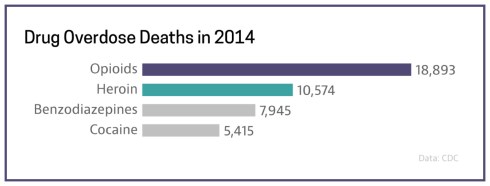
Over the last 15 years, opioid deaths have jumped 369 percent while heroin deaths have risen 439 percent, the CDC reports.

Heroin use is growing in popularity as a direct result of prescription painkillers.

Ninety-four percent of people in treatment for opioid addiction said they started using heroin because it was far cheaper and easier to get than prescriptions painkillers.

Nolan and Amico wrote: “Over the course of more than a decade, it has grown into a problem destroying lives across the nation, regardless of age, race, wealth or location.

“Nearly 90 percent of the people who tried heroin for the first time in the past decade were white. And a growing number are middle-class or wealthy.”

The opioid epidemic is erasing the stereotypes of drug abuse. It’s soccer moms and CEOs and even grandmothers.

Last July, the CDC found “significant increases in heroin use were found in groups with historically low rates, including women and people with private insurance and higher incomes. The gaps between men and women, low and higher incomes and people with Medicaid and private insurance have narrowed.”

***

Emergency departments across the country are also feeling the effects of the growing problem.

Between 2005 and 2014, the rate of hospitalizations and emergency department visits from opioid overuse in Missouri has more than doubled, according to the Missouri Hospital Association.

Pat Giffin, RN and emergency department nurse manager at SSM Health St. Francis, said the hospital in Maryville is dealing with similar trends.

“We are seeing a lot of Norco (hydrocodone) use and abuse,” Giffin said. “It has substantially increased in the past couple of years.”

***

Bethany
More than 20 years after her step-father’s car accident, where he was initially prescribed opioids for the pain, Bethany’s younger brother finally learned the truth about those emergency room visits from his childhood.

The 30-year-old youth pastor and father of four was astounded by the revelation.

“Do you realize I spent most of my childhood in an emergency room?” he said to her. “Mom had to drag me along to the ER when he had to get a shot for the ‘pain.’ All the soccer and baseball and basketball games missed…

“All because he was a drug seeker? It was preventable? It was all a lie?”

While Bethany was saddened by his disappointment, she was not surprised.

“Those physician-prescribed drugs ruled our life, and sadly, destroyed relationships and severed family ties,” she said.

***

Missouri is the only state in the nation, Giffin said, without a prescription drug monitoring program.

She said MHA issued a policy in November stating: “The absence of a prescription drug monitoring program through a registry system impedes the ability of physicians, pharmacists and hospitals to evaluate patients’ complete prescription and utilization profile.

“The use of a prescription drug monitoring program may be one effective strategy to help identify patients who may be seeking multiple providers and would benefit from opioid diversion.”

***

The chronic illness became too much for Adrianna’s mom to handle.

“It felt like she gave up on everything,” she said.

And that’s when she started abusing the medicine prescribed by her doctors.

“She held herself differently and sometimes I could barely understand what she was saying,” Adrianna said. “I tried to talk to her about it but she didn’t care about me or my opinion.”

With her dad working long hours – and not feeling like she could share her situation with her friends – Adrianna began to feel very alone.

“My life wasn’t supposed to end up like this,” she said.


prescription addiction: small towns not immune to rising opioid epidemic, Part 1

Drug Overdose Deaths

By Jacki Wood, written for the Nodaway News Leader, March 2016

Editor’s note: the names in this story have been changed to protect their privacy.

Adrianna

The grass had just started to turn green that March and Adrianna could hear a tractor in the pasture, preparing for spring planting, as she pulled into her driveway after track practice.

It was, by most accounts, a beautiful spring day in Northwest Missouri.

For Adrianna, though, that brightness and hope of spring quickly turned dark as she found her mom lying on the lawn.

“I remember shaking her to wake her up,” she said. “I wanted to scream for help, but I didn’t want to cause attention to the situation.”

Her pupils were dilated and she reeked of smoke as she laid there limp.

After months of prescription drug abuse, her mom barely weighed 90 pounds. Sixteen-year-old Adrianna managed to get her into the car and drive her to the hospital.

“I had been waiting for something big to happen for awhile,” Adrianna said, “so I wasn’t surprised.”

Still, it wasn’t how the small-town teenager perceived life a few months before.

She and her mom loved shopping and getting their nails done together, trying new recipes, doing makeovers, talking until two in the morning, laughing, watching movies.

“My mom was my best friend,” she said. “She was the person who I told everything to and did everything with.”

***

Forty-four people die from prescription drug overdoses every day in the United States, largely due to prescription painkillers called opioids, the US Department of Health and Human Services reports.

Hydrocodone (Vicodin) and oxycodone (OxyContin) are the most common ones involved.

Since 2000, the death rate from opioid drug overdoses has increased 200 percent.

Senator Claire McCaskill has been bringing the issue to the forefront in recent months.

“This has reached epidemic proportions in our state,” she said at a hearing held February 8 in Jefferson City.

Missouri ranks number one in the rate of prescription opioids sold among Midwestern states and is the only state in the country without a prescription drug monitoring program.

***

Bethany

Bethany’s family went to church. Her mother was a teacher and she and her brother were on the honor roll. They said please and thank you, took their hats off when they entered buildings and wrote thank you notes.

On the outside, everything seemed normal. Charming, even.

But on the inside, there was a hidden addiction devastating their lives.

“Once in the privacy of our home, my step-father would be nothing short of cruel,” Bethany said, a Nodaway County resident who also grew up in the area during her teenage years.

Her step-father’s addiction to prescription pain medicine began in the late 1980s after he was in a car accident and was initially put on Demerol for pain.

“He kept returning for more, and when he couldn’t get his prescription filled, he’d go to the emergency room,” she said. “Since pain can’t be proven, the ER staff pretty much had their hands tied and he would leave with, at minimum, a shot of pain meds and usually a week’s supply of pills.”

Demerol, Morphine, Oxycodone, Percocet. Anything he could get a physician to prescribe for him.

“Unfortunately in a small town, where there were only a couple of doctors, it was easier to give him a prescription and send him on his way,” she said.

***

Opioids also include the illegal drug heroin.

Four in five new heroin users started out misusing prescription painkillers, according to the Drug Enforcement Agency.

From 2000 to 2013, the rate of heroin overdose deaths nearly quadrupled in the US.

And in a 2014 survey by JAMA, 94 percent of people in treatment for opioid addiction said they went from prescription painkillers to heroin because the prescriptions were “far more expensive and harder to obtain.”

***

Just a few months before, Adrianna would have described her family as normal. Her parents had good jobs and they were well-known and well-liked in the community.

And then her mom was diagnosed with a chronic illness and prescribed painkillers to help deal with the disease.

“She saw more than one doctor and was prescribed more than one pain medication,” Adrianna said.

It didn’t take long before she began to see changes in her mom.

“The disease, combined with the drug use, was taking control of her life at home as well as at work,” she said.

***

At a roundtable discussion on February 16 in St. Louis, McCaskill said: “We are drunk on pain medication in this country.

“There’s a reason that 49 states have implemented a prescription drug monitoring database — because the positives far outweigh the negatives.”

Last week, the Missouri House sent a prescription drug monitoring program bill to the Senate, where similar proposals have stalled in the past.

***

Bethany’s step-father’s addiction tragically led to verbal and sexual abuse in their home.

“Those physician-prescribed drugs ruled our life,” she said. “Everyone seemed to know — aunts, cousins, teachers, community members …

“But no one would talk.”


Are we missing the whole point?

That they might have joy column by Jacki Wood for the Nodaway News Leader

We sat down at a corner table in Pizza Planet and began eating a late lunch. It was Christmas Eve, our first day at Disney World, and the restaurant was buzzing not unlike the scene from Toy Story.

This trip was our Christmas present, but I had struggled with knowing that so many employees were away from their families while we were enjoying ours.

In an effort to not get too caught up in the magic of Disney, we decided to be more diligent in showing our gratitude and sharing the spirit of Christmas. We sincerely thanked the shuttle drivers, cast members, cashiers and custodians and wished them all a Merry Christmas. We tried to be especially cheery, gracious and giving. And we did the same to our fellow guests in the very crowded but happiest place on earth.

So as we began eating our pizza that afternoon, a teenage girl sat down at the table next to us. We smiled and Larry said “Merry Christmas!”

She started talking with us while waiting for the rest of her family.

As the conversation progressed, we learned she was from New York, going to school, working a few part-time jobs including one as a Hebrew language tutor and that she was Jewish. To which Larry’s “Merry Christmas” greeting was brought up.

Was she offended when people say that to her?

No, not at all, she replied. In fact, she said, when someone says Merry Christmas, she’s happy they enjoy their holiday. And she wants to be happy about celebrating hers as well.

When we were done, Larry wished her a Happy Chanukah and she replied with Merry Christmas to us.

I was so impressed by this young but wise teenager.

In recent years, there are many who have been offended over the phrase “Happy Holidays.”

I think most people’s response to this issue is because they believe we need to keep Christ in Christmas.

And I whole-heartedly agree.

I say Merry Christmas because that is what I celebrate.

But when we choose to be offended because someone is saying Happy Holidays instead of Merry Christmas, I believe we have missed the whole point of the season.

Before I get to that point, however, let’s remember that we do live in the United States of America, which was, in part, founded upon religious freedom. “Congress shall make no law respecting an establishment of religion, or prohibiting the free exercise thereof.”

Also, while the US is a mostly Christian nation – 70 percent based on the 2014 US Religious Landscape Study by the Pew Research Center – we have no national religion; 30 percent of us come from non-Christian faiths (Jewish, Muslim, Buddhist, Hindu and others) as well as those who are unaffiliated like atheists and agnostics.

Again, we are free to choose.

The Interfaith Calendar, from the Mall Area Religious Council in Minnesota, lists 40 religious observances from major world religions which are observed from November through January, many of which are not Christian.

More importantly than all of that, though, and back to my main point: what is the purpose of Christmas?

This answer could differ, even among Christians.

But I think most of us agree that it is a time to rejoice in the birth of our Savior. A season to not only remember him but also renew our commitment to be more like Him.

Earlier this month, Pastor Scott Moon, FUMC Maryville, wrote an Advent column in our paper, “Don’t just observe Christmas…Experience Christmas!” He said: “This year, do whatever it takes to step away from the mere observance of a holiday and enter into the experience of God’s love and grace which is at the heart of Christmas.”

His words reminded me of something I love from Dieter F. Uchtdorf: “If we’re honest with ourselves, most of us get caught up in the chaos of Christmas – the shopping, the decorating, the baking. Those can all lend to the spirit of Christmas and the spirit of giving but many times they become a distraction and we end up acting more like Scrooge than Tiny Tim.”

Choosing to be offended by someone saying Happy Holidays, or by a plain red Starbucks cup, or anything else, makes us act more like Scrooge and takes away from the experience of Christmas, the love, the joy, the giving.

The way we can truly keep Christ in Christmas is through our actions.

I’m grateful for that young 19-year-old Jewish girl from New York who reminded me of that, not just this time of year, but always.

“A new commandment I give unto you, That ye love one another; as I have loved you, that ye also love one another” (John 13:34).

Even those who say Happy Holidays.


‘Even the darkest night will end’

c2c07456547b2ec70e1b1b5b40d976b0

By Jacki Wood, “That they might have joy” column for the Nodaway News Leader

My mental health has taken a beating over the last year or so.

I have a physical illness that has really been taking it to me, and as a result, affecting my mental health.

I’ve been battling this physical ailment for half of my life. The beginning years were difficult. The middle years were much more tolerable. And the last couple have been the worst.

What makes it even harder for me is I feel I’ve lived two completely opposite lives. The first very active, athletic, outgoing and involved. Now mostly inactive, reclusive and disinterested. There are times when I really miss that first life.

A couple of summers ago, I wrote about my illness, obesity and weight loss. I said at the time, it was the most important thing I’d ever written.

But this might be even more important than that. Now, just a couple of short years since then, I spend most of my time in bed, I’m overweight again and have slipped back into old habits as I struggle to function each day.

That’s when the mental health beating really reared its head. It’s hard to be productive or stay positive or even feel like a human being when you can’t get out of bed.

(Side note: I’ve tried a lot of different treatments. Some have worked for awhile. Some not at all. I frequently get suggestions from people. In fact, I just started something new. And while I appreciate everyone’s concern, that’s not what I’m seeking with this column).

I’ve wondered why this is the load I am burdened to carry and if I will be carrying it my entire life. I mean, why do some people get cancer and some don’t? And even further, why do some people beat cancer and some receive the same treatment and die?

After spending much of the last year contemplating these types of things and feeling sorry for myself, lonely, sad and even angry, I decided I needed to try something different.

For the month leading up to my 40th birthday this summer, I decided to do a #30DaysOfJoy challenge, looking for simple joys in my life and posting them on Facebook.

It was a mostly positive experience. I made some really great memories this summer despite the illness. And I was reminded how much my family cares about me. They’ve really stepped up and took on more responsibilities. They also listen when I need that and are just there when I don’t want to talk. They love me through my nonsense, negativity and annoyance of everything and everyone.

Some days, though, were a real challenge to find any joy at all. I mean, just getting on Facebook and seeing everyone else’s happy, perfect posts made me want to throw up or throw something at the wall. Even worse, I had some really dark days that I’m frankly embarrassed by. Which is really unfortunate, because when I’m at my best, I realize how blessed I am.

But… I’m not always at my best. I’m not always thinking clearly or logically with this illness.

This is not something most of us feel comfortable talking about. Our mental health, I mean. And yet if we would just have the courage to do so, I think we would be far better off.

After someone dies by suicide, people ask why. I think I understand it more now. They’re worn out, tired, exhausted. They want an end to the pain, the hurting, to whatever the problem is. I don’t think most people want to kill themselves. Or hurt those who care about them by doing so.

They just want it to end.

I’ve been there. Even as I write this, I’m in the throes of it all. I don’t want to die. But there are times when I want an end. I want the pain to end. I want my old life back.

And then I realize my old life didn’t include my husband. Or my children. Or the memories we’ve shared together. Or the experiences I’ve gained over the last 20 years that make me who I am and how I am able to write this.

If you’re there with me, if you are just so very tired of it all, don’t give in, don’t give up, don’t quit. No matter how bad it is, just keep trying, for one more day or for just one more moment even.

Get help. Seek professional help if you need to. Or find an outlet like I have through writing.

Talk to someone. A friend, a family member, someone who will listen or just be there. Call the National Suicide Prevention Hotline at 1.800.273-8255 or visit suicidepreventionlifeline.org where you can chat online.

If that doesn’t work for you and if you have no one else you can to talk to, contact me.

I will listen.

NSl6vlMv

I’m not so good at the phone thing, but I text, email and message really well. My email is jackijwood@gmail.com and you can find me on Facebook at facebook.com/jacki.wood.

In Les Misérables, Victor Hugo wrote: “Even the darkest night will end and the sun will rise.”

That’s been true for me. After every single dark night I’ve ever had, the sun has always risen.

    National Suicide Prevention Week is September 7 to 13. To learn how you can help, visit sprc.org.suicide+prevention+lifeline+with+ribbon